
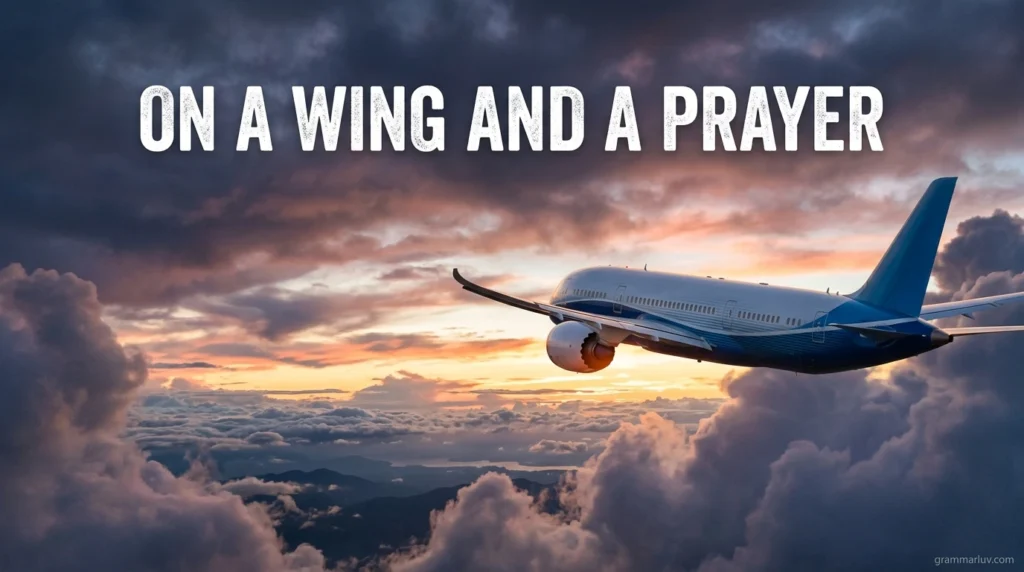
Figurative language is the heartbeat of expressive communication. Whether you’re a student aiming to improve essays, a writer crafting compelling narratives, or an English learner building fluency, mastering figurative language can elevate your writing from basic to memorable. It adds color, emotion, and depth—turning plain sentences into vivid imagery and abstract ideas into relatable experiences.
When you use figurative language effectively, you engage readers’ senses and imagination. Instead of stating facts plainly, you show meaning through comparisons, symbolism, and creative phrasing. This enhances clarity, strengthens tone, and improves overall writing skills. From simile examples to metaphor examples, and from poetic expression to descriptive language, these tools allow writers to communicate complex emotions and ideas with elegance.
In this comprehensive guide, we’ll explore the idiom “on a wing and a prayer”, unpacking its meaning, usage, and stylistic value. Along the way, we’ll connect it to broader concepts like literary devices, vocabulary enhancement, and creative writing techniques—helping you use it confidently and effectively.
Understanding the Idiom Meaning
The phrase on a wing and a prayer is an idiomatic expression used to describe a situation where success depends on luck, hope, or minimal resources rather than careful planning or certainty.
Core Meaning:
- Doing something with very little chance of success
- Relying on hope rather than preparation
- Proceeding despite risk or uncertainty
Simple Explanation:
It means you’re trying to succeed even though the odds are against you—almost like you’re trusting fate to carry you through.
Origin and Historical Context
This idiom originated during World War II. It was popularized by a song describing a damaged aircraft returning safely despite severe challenges. The imagery of a plane barely flying—supported only by a “wing” and sustained by a “prayer”—captured the idea of surviving against all odds.
Over time, the phrase evolved into everyday usage, becoming a powerful metaphor in both spoken and written English.
Figurative Language Breakdown
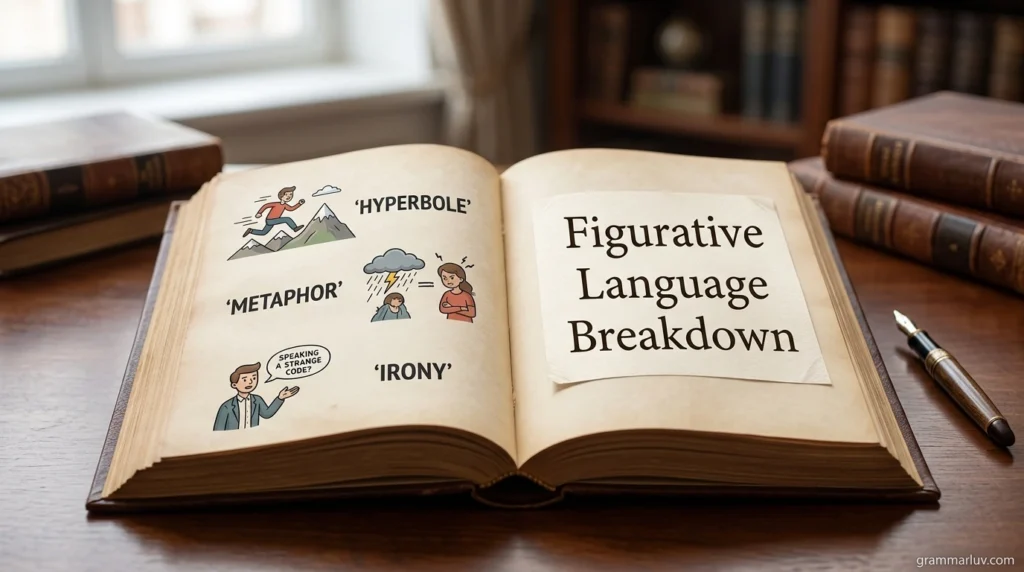
To fully appreciate this idiom, it helps to analyze it through the lens of figurative language.
Type of Figurative Language:
- Metaphor: The situation is compared to a struggling airplane
- Symbolism: “Wing” represents limited capability; “prayer” symbolizes hope or faith
Why It Works:
It creates a vivid mental image—making the abstract concept of uncertainty more tangible and emotionally impactful.
Comparison with Similar Expressions
Understanding related phrases helps deepen vocabulary and improves semantic SEO by linking concepts.
ExpressionMeaningToneBy the skin of your teethBarely succeedingInformalAgainst all oddsSuccess despite difficultyInspirationalA shot in the darkAttempt without certaintyNeutralHanging by a threadNearly failingDramatic
These comparison examples help writers choose the most appropriate phrase depending on tone and context.
Sentence Examples for Everyday Use
Basic Sentence Examples:
- The team completed the project on a wing and a prayer.
- He started his business on a wing and a prayer, with no funding.
- We passed the exam on a wing and a prayer after minimal preparation.
Advanced Sentence Examples:
- The rescue mission proceeded on a wing and a prayer, relying on instinct rather than strategy.
- Her debut novel was published on a wing and a prayer, yet it became a bestseller.
- The startup survived its early years on a wing and a prayer before gaining stability.
Academic Context:
- The research was conducted on a wing and a prayer due to limited funding.
Tone and Context Usage
Tone plays a crucial role in how this idiom is perceived.
Common Tones:
- Hopeful: Emphasizing courage despite uncertainty
- Desperate: Highlighting lack of options
- Humorous: Light-hearted acknowledgment of risk
Example by Tone:
- Hopeful: “They launched their dream on a wing and a prayer, believing in success.”
- Desperate: “The operation was carried out on a wing and a prayer.”
- Humorous: “I cooked dinner on a wing and a prayer—and somehow it worked!”
When to Use the Idiom
Appropriate Situations:
- Storytelling and narrative writing
- Describing risky or uncertain situations
- Creative writing and poetic expression
- Informal and semi-formal communication
Benefits:
- Adds emotional depth
- Enhances descriptive language
- Improves reader engagement
When to Avoid It
Situations to Avoid:
- Highly formal or technical writing
- Legal or scientific documents
- When clarity is more important than style
Why Avoid:
Idioms can confuse readers who are unfamiliar with figurative language, especially English learners at beginner levels.
Common Mistakes and How to Fix Them

1. Misinterpreting the Meaning
❌ Incorrect: “He succeeded easily on a wing and a prayer.” ✔ Correct: Use it only when success is uncertain or unlikely.
2. Overusing Idioms
Too many idioms can clutter writing and reduce clarity.
3. Mixing Figurative Expressions
❌ “On a wing and a prayer by the skin of his teeth” (overloaded) ✔ Choose one clear expression.
Role in Creative Writing
This idiom is especially valuable in creative writing.
Enhances:
- Character development
- Emotional tension
- Narrative depth
Example:
“The explorers ventured into the storm on a wing and a prayer, their fate uncertain but their resolve unshaken.”
This kind of poetic expression creates vivid imagery and emotional resonance.
Simile and Metaphor Connections
Although this idiom is a metaphor, it can inspire simile examples.
Simile Examples:
- “He fought like someone surviving on a wing and a prayer.”
- “The project moved forward like a plane barely staying airborne.”
Metaphor Examples:
- “Their hope was the only engine keeping them going.”
- “The plan was a fragile wing in a storm of uncertainty.”
Vocabulary Enhancement Through Idioms
Learning idioms like this boosts vocabulary and comprehension.
Related Words:
- Uncertainty
- Risk
- Hope
- Chance
- Survival
Synonyms:
- Desperately
- Unreliably
- Riskily
Using these words alongside idioms improves writing flexibility and depth.
Exercises for Practice
Exercise 1: Fill in the Blank
Complete the sentence:
- The company survived its early years __________.
Exercise 2: Rewrite
Turn this into a figurative sentence:
- “They had very little chance of success.”
Exercise 3: Create Your Own
Write 3 sentences using the idiom in different tones.
How It Improves Writing Skills
Using idioms strategically can:
- Enhance clarity through imagery
- Improve engagement
- Add stylistic variety
- Strengthen communication skills
For English learners, it also aids in understanding cultural nuances and real-world usage.
FAQs
1. What does the idiom mean?
It means attempting something with little chance of success, relying on hope.
2. Is it formal or informal?
It is generally informal but can be used in semi-formal writing.
3. Can beginners use it?
Yes, but they should understand its figurative meaning first.
4. Is it a metaphor or simile?
It is a metaphor.
5. How can I practice using it?
Write sentences, read examples, and use it in storytelling.
Conclusion
Figurative language is an essential tool for anyone looking to improve writing and communication. Idioms like on a wing and a prayer demonstrate how powerful language can be when it combines imagery, emotion, and meaning.
By understanding its idiom meaning, exploring sentence examples, and practicing its use in different contexts, you can significantly enhance your writing skills. Whether you’re crafting essays, stories, or everyday communication, incorporating such expressions adds richness and depth.
Keep practicing, experiment with descriptive language, and explore other literary devices. Over time, your writing will become more engaging, expressive, and impactful.