
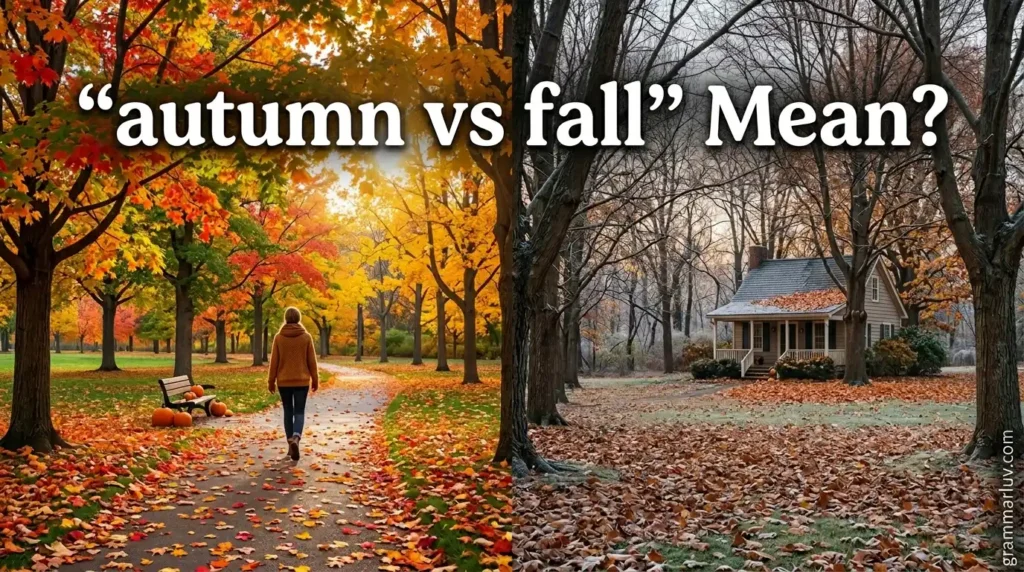
Language is more than just a tool for exchanging information—it’s a medium for expression, imagination, and connection. Figurative language plays a central role in transforming ordinary sentences into vivid, memorable experiences. Whether you’re a student crafting essays, a writer developing stories, or an English learner expanding fluency, mastering figurative language can significantly enhance your communication skills.
When you describe a chilly morning as “a whisper of winter in the air,” you’re not just informing—you’re painting a picture. This ability to evoke imagery, emotion, and nuance is what separates basic writing from compelling storytelling. In this article, we’ll explore autumn vs fall, unpacking not only their meanings and differences but also how they function in descriptive language, poetic expression, and everyday communication.
What Do “Autumn” and “Fall” Mean?
Both autumn and fall refer to the same season—the period between summer and winter characterized by cooler temperatures, shorter days, and changing leaf colors. Despite their shared meaning, their usage varies based on context, tone, and region.
- Autumn: Derived from Latin autumnus, it carries a formal, poetic tone.
- Fall: Originating from the phrase “fall of the leaf,” it feels more casual and conversational.
Historical Origins and Evolution of Usage
Understanding the roots of these words helps clarify their differences:
- Autumn entered English through French influence and became widely used in British English.
- Fall was commonly used in early English but became more dominant in American English over time.
Today:
- British English prefers autumn.
- American English commonly uses fall, though autumn is still understood and occasionally used for stylistic effect.
Tone and Context: Choosing the Right Word
When to Use “Autumn”
- Formal writing (essays, literature)
- Poetic expression
- Academic contexts
Example sentences:
- “The golden hues of autumn filled the countryside.”
- “Autumn symbolizes transition and reflection.”
When to Use “Fall”
- Casual conversation
- Informal writing
- Everyday communication
Example sentences:
- “I love going for walks in the fall.”
- “Fall is my favorite season for cozy weather.”
Figurative Language in Seasonal Description
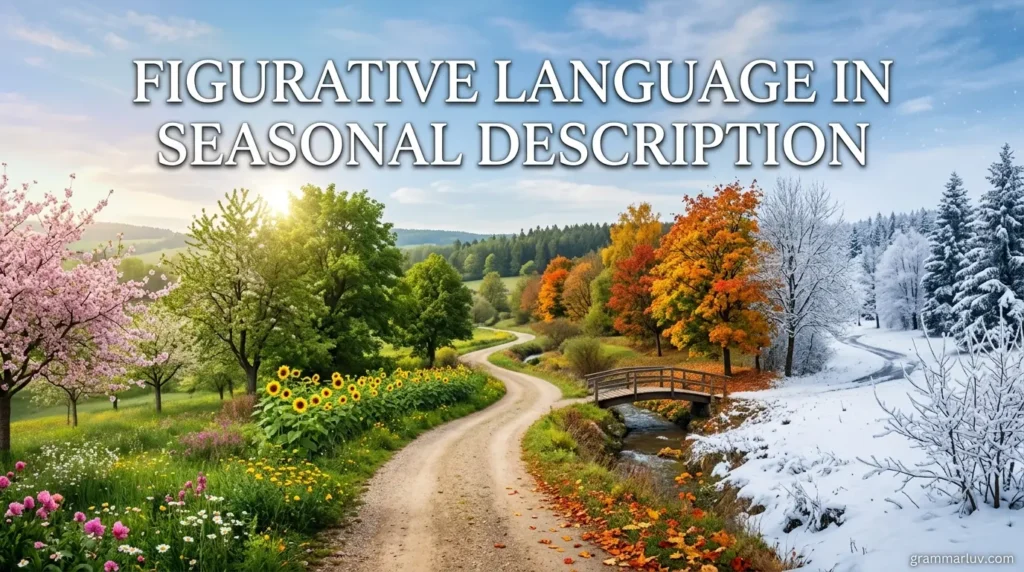
Describing seasons offers rich opportunities to use figurative language. Let’s explore how autumn and fall can be enhanced through literary devices.
Simile Examples
Similes compare using “like” or “as.”
- “Leaves drifted like confetti in the fall breeze.”
- “The air felt as crisp as a fresh apple in autumn.”
Metaphor Examples
Metaphors make direct comparisons.
- “Autumn is a painter, coloring the world in gold.”
- “Fall is a farewell song to summer.”
Personification
Giving human traits to non-human elements.
- “Autumn whispered secrets through the trees.”
- “Fall danced across the fields with rustling leaves.”
Comparison Table: Autumn vs Fall
FeatureAutumnFallToneFormal, poeticCasual, conversationalUsage RegionBritish EnglishAmerican EnglishWriting ContextLiterature, academicEveryday speechEmotional ImpactReflective, nostalgicFriendly, simpleFrequency in MediaLess frequentMore frequent
Vocabulary Enhancement Through Seasonal Language
Expanding vocabulary is key for English learners and writers. Here are related terms:
- Harvest: The gathering of crops
- Foliage: Leaves collectively
- Crisp: Cool and fresh
- Amber: A warm yellow-orange color
- Breeze: Light wind
Sentence examples:
- “The foliage turned amber as autumn arrived.”
- “A crisp breeze signaled the start of fall.”
Idioms and Expressions Related to the Season
Understanding idioms improves fluency and comprehension.
Common Idioms
- “Fall into place”: Things become clear or organized Example: “Everything started to fall into place after practice.”
- “Autumn years”: Later stage of life Example: “He spent his autumn years traveling the world.”
Creative Writing Applications
Using autumn or fall strategically can shape the tone of your writing.
Descriptive Paragraph Example
- “Autumn arrived quietly, wrapping the forest in shades of gold and crimson. The trees stood like silent poets, shedding verses with every falling leaf.”
Narrative Sentence Example
- “In the fall, we gathered around bonfires, sharing stories under the fading light.”
When to Use and When to Avoid

Use “Autumn” When:
- Writing poetry or literature
- Creating emotional or reflective tone
- Targeting international or British audiences
Avoid “Autumn” When:
- Writing informal texts or chats
- Aiming for simplicity
Use “Fall” When:
- Speaking casually
- Writing blogs or conversational content
- Addressing American audiences
Avoid “Fall” When:
- Writing formal essays (unless context allows)
- Seeking poetic elegance
Common Mistakes to Avoid
- Using both interchangeably without considering tone
- Incorrect: “Autumn is fun, and fall is poetic.”
- Better: Choose based on context.
- Overusing figurative language
- Too many metaphors can confuse readers.
- Mixing regional styles
- Be consistent with British or American English.
Exercises for Practice
Exercise 1: Choose the Right Word
Fill in the blank:
- “The leaves began to change in ______.”
- “She wrote a poem about the beauty of ______.”
Exercise 2: Create Similes
Write two similes describing the season.
Exercise 3: Rewrite Sentences
Convert a literal sentence into a metaphor:
- “The leaves are falling.”
Enhancing Writing Skills with Seasonal Themes
Using seasonal vocabulary improves:
- Descriptive language
- Narrative depth
- Emotional expression
Practice by writing short paragraphs using:
- At least one simile
- One metaphor
- One idiom
Poetic Expression and Literary Devices
Poetry often favors autumn due to its rhythm and elegance.
Example:
- “Autumn’s breath lingers in golden light, A quiet farewell to summer’s bright delight.”
Literary devices used:
- Imagery
- Alliteration
- Symbolism
FAQs
1. Are “autumn” and “fall” exactly the same?
Yes, they refer to the same season but differ in tone and regional usage.
2. Which is more correct?
Both are correct; choice depends on context and audience.
3. Is “autumn” more formal than “fall”?
Yes, it is generally considered more formal and poetic.
4. Can I use both in the same piece?
Yes, but maintain consistency in tone and style.
5. Which should English learners use?
Start with fall for simplicity, then learn autumn for advanced expression.
Conclusion
Understanding the nuances between autumn and fall goes beyond vocabulary—it opens doors to richer expression, clearer communication, and more engaging writing. By mastering figurative language, exploring literary devices, and practicing creative writing techniques, you can elevate your language skills to a new level.
Whether you’re crafting a poem, writing an essay, or simply describing the changing seasons, choosing the right word—and using it effectively—makes all the difference.