

Language is more than just words on a page. It’s a tool for painting vivid pictures in the minds of readers. One of the most effective ways to make writing expressive and memorable is through similes. Similes are comparisons using “like” or “as” to highlight similarities between two seemingly unrelated things. They add color, emotion, and clarity, allowing readers to understand concepts in relatable ways.
When describing someone or something as different, similes help capture uniqueness, peculiarity, or individuality in a way that plain adjectives often cannot. Using similes for different can make your writing stand out, whether in storytelling, poetry, essays, or even casual texting.
Like a Snowflake in Summer
This simile emphasizes rarity and uniqueness. Snowflakes are delicate and distinct, and seeing one in summer is impossible, symbolizing something truly unusual.
Tone: Positive, reflective, whimsical
Best Usage: Creative writing, poetry, expressing admiration for someone’s uniqueness
Examples:
- Her ideas were like a snowflake in summer, beautiful and unexpected.
- Meeting someone who loves classical music at a rock festival is like a snowflake in summer.
- His humor is like a snowflake in summer, refreshing and rare.
Texting Example:
- “Your sense of style is like a snowflake in summer, totally unique!”
Like a Fish in the Sky
A playful simile for something completely out of place or extraordinary. It highlights the unusual nature of a person or event.
Tone: Humorous, whimsical
Best Usage: Light-hearted writing, social media captions
Examples:
- Watching him dance is like a fish in the sky, unexpected but mesmerizing.
- She handled the situation like a fish in the sky, totally out of her element but confident.
- Their friendship is like a fish in the sky, surprising yet beautiful.
Daily Usage:
- “You solving that puzzle like a fish in the sky is impressive!”
Like a Star in the Ocean
This simile evokes rarity and brilliance in an unusual environment. It’s great for highlighting uniqueness in beauty or talent.
Tone: Romantic, poetic
Best Usage: Compliments, descriptive writing
Examples:
- Her kindness is like a star in the ocean, shining where you least expect it.
- Finding a mentor like him is like a star in the ocean, illuminating the path.
- That painting stood out like a star in the ocean among ordinary artworks.
Texting Example:
- “You’re like a star in the ocean, always standing out beautifully!”
Like a Puzzle Piece from Another Set
This simile points to incongruity or individuality. It suggests someone or something doesn’t quite fit in with the usual pattern.
Tone: Thoughtful, sometimes melancholic
Best Usage: Storytelling, character descriptions
Examples:
- She was like a puzzle piece from another set, unique but not fitting conventional molds.
- His approach to work is like a puzzle piece from another set, different but effective.
- Feeling different in a new city was like a puzzle piece from another set.
Daily Usage:
- “Your ideas are like a puzzle piece from another set, refreshing and creative.”
Like a Mango in a Basket of Apples
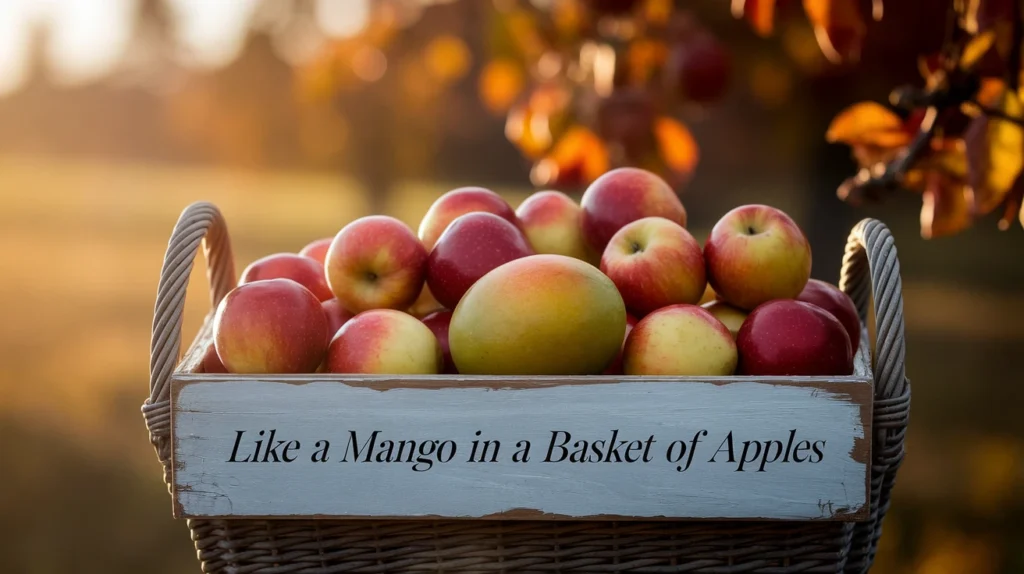
This simile conveys standout qualities in a familiar environment. The mango represents uniqueness amid commonality.
Tone: Light, friendly, illustrative
Best Usage: Social comparisons, humor, descriptive writing
Examples:
- She laughed like a mango in a basket of apples, impossible to ignore.
- His accent was like a mango in a basket of apples at the meeting, distinct and noticeable.
- That quirky dress looked like a mango in a basket of apples among traditional suits.
Texting Example:
- “You show up like a mango in a basket of apples, totally unforgettable!”
Like a Unicorn in the City
This simile highlights rarity and magical uniqueness, emphasizing someone extraordinary in an ordinary environment.
Tone: Whimsical, inspiring
Best Usage: Character description, motivational writing
Examples:
- Her creativity is like a unicorn in the city, rare and magical.
- Meeting someone so kind was like a unicorn in the city, enchanting and unexpected.
- His laughter was like a unicorn in the city, sparkling and unusual.
Daily Usage:
- “Your talent is like a unicorn in the city—one of a kind!”
Like a Raindrop on a Desert
This simile emphasizes the contrast between the norm and the rare element. It conveys a refreshing or surprising presence.
Tone: Poetic, reflective
Best Usage: Emotional writing, descriptive nature metaphors
Examples:
- Her encouragement was like a raindrop on a desert, reviving spirits unexpectedly.
- His jokes were like a raindrop on a desert, making everyone smile.
- That moment of kindness felt like a raindrop on a desert.
Texting Example:
- “Your message was like a raindrop on a desert, perfectly timed!”
Like a Rainbow at Midnight
A vivid simile to describe something extraordinary or impossible. Highlights contrast and rarity.
Tone: Mystical, poetic
Best Usage: Creative writing, fantasy descriptions
Examples:
- His insight was like a rainbow at midnight, surprising yet beautiful.
- Seeing her dance was like a rainbow at midnight, unexpected and magical.
- That act of bravery was like a rainbow at midnight, rare and memorable.
Daily Usage:
- “You showing up with coffee was like a rainbow at midnight, totally unexpected!”
Like a Penguin in the Sahara
Humorous and striking, this simile conveys someone or something entirely out of place.
Tone: Funny, exaggerated
Best Usage: Light-hearted writing, social media captions
Examples:
- He looked like a penguin in the Sahara, clearly out of his comfort zone.
- Her new fashion sense was like a penguin in the Sahara, bold and unusual.
- That idea felt like a penguin in the Sahara at the meeting.
Texting Example:
- “Trying sushi for the first time was like a penguin in the Sahara for me!”
Like a Book in the Wind

This simile suggests fragility, unpredictability, or nonconformity.
Tone: Reflective, gentle
Best Usage: Emotional or introspective writing
Examples:
- Her emotions were like a book in the wind, open to anyone but easily swayed.
- His career path was like a book in the wind, unpredictable yet inspiring.
- Creativity in that class was like a book in the wind, flying free and wild.
Daily Usage:
- “Your energy today is like a book in the wind, unpredictable and fun.”
Like a Moonflower at Noon
This simile emphasizes something unusual or thriving in unexpected conditions.
Tone: Poetic, inspirational
Best Usage: Nature descriptions, motivational writing
Examples:
- His resilience is like a moonflower at noon, rare and impressive.
- That innovation was like a moonflower at noon, blooming under pressure.
- Her presence was like a moonflower at noon, delicate yet strong.
Texting Example:
- “You handled that chaos like a moonflower at noon, perfectly calm!”
Like a Chameleon in a Library
Represents adaptability but in an unusual context, highlighting contrast.
Tone: Observational, humorous
Best Usage: Character description, situational humor
Examples:
- He blended in like a chameleon in a library, unnoticed but present.
- Her quiet charm is like a chameleon in a library, subtle yet effective.
- Their negotiation tactics were like a chameleon in a library, skillfully hidden.
Daily Usage:
- “You adapted to that meeting like a chameleon in a library!”
Like a Comet Among Stars
Highlights brilliance and uniqueness, standing out in a group.
Tone: Inspirational, awe-filled
Best Usage: Compliments, motivational writing
Examples:
- Her talent shone like a comet among stars, impossible to ignore.
- That idea was like a comet among stars, revolutionary and bright.
- His artwork is like a comet among stars, rare and striking.
Texting Example:
- “Your presentation today was like a comet among stars, amazing!”
Like a Key Without a Lock
Represents uniqueness and not fitting standard expectations.
Tone: Reflective, slightly melancholic
Best Usage: Literary descriptions, introspection
Examples:
- His approach to life is like a key without a lock, unconventional but intriguing.
- She felt like a key without a lock in a crowd of similar people.
- That invention is like a key without a lock, designed for a different purpose.
Daily Usage:
- “Your creativity is like a key without a lock, totally original!”
Like a Candle in the Snow

Highlights contrast, warmth, and delicate uniqueness.
Tone: Poetic, uplifting
Best Usage: Nature metaphors, inspirational writing
Examples:
- Her kindness was like a candle in the snow, illuminating even the coldest moments.
- That gesture was like a candle in the snow, small but powerful.
- His determination shone like a candle in the snow.
Texting Example:
- “You cheering me up was like a candle in the snow, perfect timing!”
Like a Kite in the Forest
Represents freedom and difference, contrasting environment expectations.
Tone: Playful, imaginative
Best Usage: Creative writing, storytelling
Examples:
- His adventurous spirit is like a kite in the forest, unusual yet unstoppable.
- That outfit was like a kite in the forest, standing out vibrantly.
- Her laughter was like a kite in the forest, soaring and rare.
Daily Usage:
- “You handled that challenge like a kite in the forest, flying high!”
Like a Rose Among Thorns
Symbolizes uniqueness and beauty in a tough environment.
Tone: Romantic, uplifting
Best Usage: Compliments, poetry
Examples:
- She was like a rose among thorns, delicate yet striking.
- His courage was like a rose among thorns, shining in adversity.
- That idea bloomed like a rose among thorns in a sea of ordinary concepts.
Texting Example:
- “Your kindness is like a rose among thorns, rare and beautiful!”
Like a Dolphin in the Mountains
Humorous simile for someone who is unconventional or out of place.
Tone: Funny, imaginative
Best Usage: Light-hearted, playful writing
Examples:
- His dancing skills are like a dolphin in the mountains, unusual but entertaining.
- Meeting him was like a dolphin in the mountains, totally unexpected.
- That invention felt like a dolphin in the mountains, bizarre but clever.
Texting Example:
- “You at the party were like a dolphin in the mountains, totally unique!”
Like a Lantern in Daylight
Represents subtle uniqueness that might go unnoticed.
Tone: Thoughtful, reflective
Best Usage: Narrative, introspective writing
Examples:
- Her quiet brilliance was like a lantern in daylight, overlooked but powerful.
- That poem was like a lantern in daylight, delicate yet meaningful.
- His wisdom is like a lantern in daylight, visible only to those who notice.
Daily Usage:
- “Your advice today was like a lantern in daylight, subtle but enlightening!”
Like a Swan in a Desert
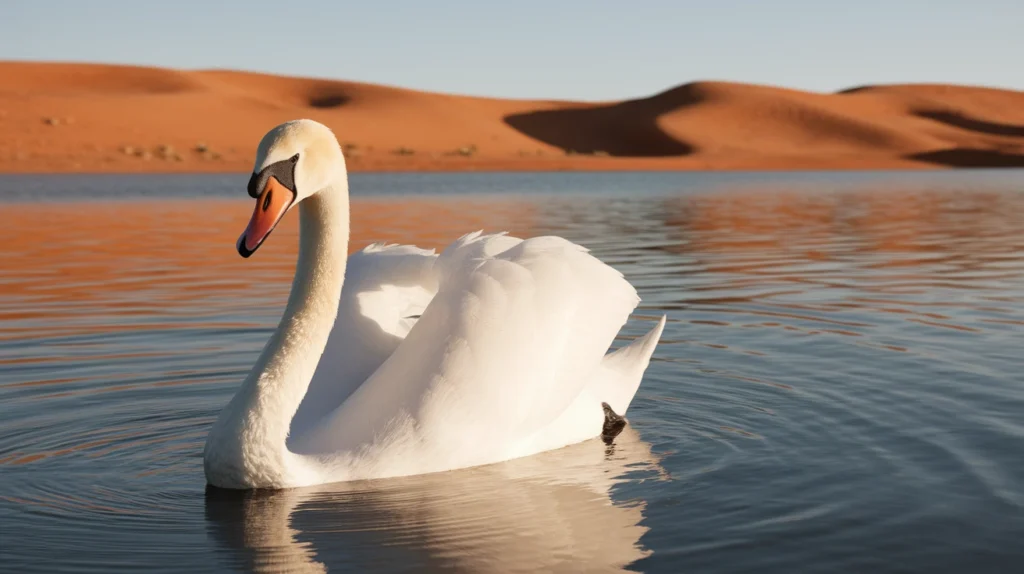
Highlights elegance and rarity in a harsh or unusual environment.
Tone: Poetic, inspiring
Best Usage: Character or situational description
Examples:
- She moved gracefully like a swan in a desert, out of place but stunning.
- His calmness is like a swan in a desert, rare and admirable.
- That gesture stood out like a swan in a desert.
Texting Example:
- “You handled that mess like a swan in a desert, elegant and calm!”
Like a Cloud Shaped Differently
A subtle simile to indicate uniqueness without exaggeration.
Tone: Gentle, descriptive
Best Usage: Observational writing, casual compliments
Examples:
- Her hairstyle was like a cloud shaped differently, soft and original.
- That cake was like a cloud shaped differently, unique but delightful.
- His viewpoint is like a cloud shaped differently, fresh and imaginative.
Texting Example:
- “Your outfit today is like a cloud shaped differently, looks amazing!”
Like a Starfish in a Lake
Humorous and unusual, this emphasizes being out of place yet noteworthy.
Tone: Light, playful
Best Usage: Casual writing, jokes
Examples:
- His fashion sense is like a starfish in a lake, odd but charming.
- Trying that dance move was like a starfish in a lake, funny but brave.
- That idea is like a starfish in a lake, different and memorable.
Daily Usage:
- “You aced that quiz like a starfish in a lake, totally unexpected!”
Like a Peacock in a Crow’s World
Represents flamboyant uniqueness and standout character.
Tone: Bold, positive
Best Usage: Compliments, social writing
Examples:
- His confidence is like a peacock in a crow’s world, dazzling and fearless.
- She spoke like a peacock in a crow’s world, commanding attention.
- That outfit was like a peacock in a crow’s world, impossible to ignore.
Texting Example:
- “You walked in like a peacock in a crow’s world, totally radiant!”
Like a Lighthouse in the Fog
Highlights guidance, uniqueness, and importance in uncertain surroundings.
Tone: Inspirational, reflective
Best Usage: Motivational writing, character praise
Examples:
- Her leadership was like a lighthouse in the fog, guiding everyone safely.
- That advice was like a lighthouse in the fog, clear and valuable.
- He stood out like a lighthouse in the fog, offering hope.
Daily Usage:
- “Your support was like a lighthouse in the fog today, much needed!”
Like a Music Note in Silence

Represents a small but meaningful difference in an otherwise uniform context.
Tone: Gentle, poetic
Best Usage: Creative writing, introspective writing
Examples:
- Her laughter was like a music note in silence, delicate and unforgettable.
- That comment was like a music note in silence, bright and noticeable.
- His gesture stood out like a music note in silence, quietly powerful.
Texting Example:
- “Your message was like a music note in silence, totally lifted my mood!”
Like a Lantern on a Cloudy Night
Conveys hope, clarity, or uniqueness in difficult circumstances.
Tone: Inspirational, poetic
Best Usage: Writing about guidance, positivity
Examples:
- Her ideas were like a lantern on a cloudy night, illuminating the way.
- That moment of kindness was like a lantern on a cloudy night, warming hearts.
- His creativity shone like a lantern on a cloudy night, rare and valuable.
Daily Usage:
- “You explaining that concept was like a lantern on a cloudy night, perfectly timed!”
Conclusion
Using similes for different transforms ordinary writing into expressive, memorable, and engaging content. Whether you are crafting stories, poems, essays, or casual texts, these similes highlight uniqueness, individuality, and contrast in vivid ways. From poetic expressions like a star in the ocean to humorous ones like a penguin in the Sahara, each simile allows readers to see familiar ideas in fresh ways. By incorporating these comparisons thoughtfully, your writing becomes not only more colorful but also more relatable, leaving a lasting impression on your audience.
Mastering similes for different is a creative skill that makes your language distinctive, memorable, and enjoyable for readers across any medium.
FAQs
1. What is a simile for different?
A simile for different is a figure of speech that compares something or someone unusual or unique to another object or concept using “like” or “as.”
2. How do similes enhance writing?
They make descriptions vivid, relatable, and emotionally engaging, helping readers visualize ideas better.
3. Can similes be humorous?
Yes, humorous similes exaggerate contrasts, making writing playful and memorable.
4. Are similes for different suitable for texting?
Absolutely, they add creativity and personality to messages without sounding formal.
5. How do I choose the right simile?
Consider the tone, context, and audience. Light-hearted similes suit casual writing; poetic ones suit literary writing.
6. Can I create my own similes?
Yes, combining unexpected comparisons often results in unique and fresh expressions.
7. How are similes different from metaphors?
Similes use “like” or “as” to draw comparisons; metaphors state the comparison directly without those words.