

Similes are a powerful tool in language that help us paint vivid pictures in readers’ minds. When you want to describe abundance, quantity, or an overwhelming amount of something, similes make your writing colorful, relatable, and memorable. Using similes for a lot can turn a simple sentence into something engaging, whether in stories, articles, or everyday conversations.
Here’s a detailed guide with 25 unique similes for expressing “a lot,” including explanations, examples, and practical daily usage tips.
As Many As Stars in the Sky
Meaning: Refers to an immense, almost infinite number.
Tone: Poetic, awe-inspiring, romantic.
Best Usage Context: Romantic writing, storytelling, inspirational texts.
Examples:
- “Her dreams were as many as stars in the sky, each shining with hope.”
- “I have as many ideas as stars in the sky, and I don’t know where to start.”
- “The possibilities before him were as many as stars in the sky.”
Texting Example: “I miss you as many times as there are stars in the sky 🌟”
Like Grains of Sand on a Beach
Meaning: Indicates an uncountable or overwhelming quantity.
Tone: Visual, descriptive, natural.
Best Usage Context: Travel writing, nature descriptions, hyperbole in everyday speech.
Examples:
- “She has patience like grains of sand on a beach—endless.”
- “The festival attracted people like grains of sand on a beach.”
- “Opportunities in this city are like grains of sand on a beach.”
Daily Use: “There are people in this mall like grains of sand on a beach 😅”
Like Leaves on a Tree in Autumn
Meaning: Suggests a very large number, especially one that is noticeable or beautiful.
Tone: Natural, elegant, visual.
Best Usage Context: Literary writing, poetry, seasonal descriptions.
Examples:
- “Autumn brought leaves like leaves on a tree in autumn, covering the ground in gold.”
- “Her questions came like leaves on a tree in autumn—relentless and numerous.”
- “His collection of stories was like leaves on a tree in autumn.”
Like Fish in the Sea
Meaning: Refers to an enormous or countless number.
Tone: Casual, universal, relatable.
Best Usage Context: Everyday speech, romantic metaphors, motivational writing.
Examples:
- “There are chances like fish in the sea—you just need to grab one.”
- “Opportunities are like fish in the sea; don’t get stuck waiting for just one.”
- “He has friends like fish in the sea, each unique in its way.”
Texting Example: “Don’t worry, there are guys like fish in the sea 🐟”
Like Snowflakes in a Blizzard
Meaning: Refers to a very large number, unique and chaotic.
Tone: Dramatic, descriptive, wintery.
Best Usage Context: Storytelling, poetry, winter-themed writing.
Examples:
- “The ideas were like snowflakes in a blizzard—so many and so varied.”
- “Children ran around like snowflakes in a blizzard.”
- “The mistakes piled up like snowflakes in a blizzard.”
Like Leaves in a Forest
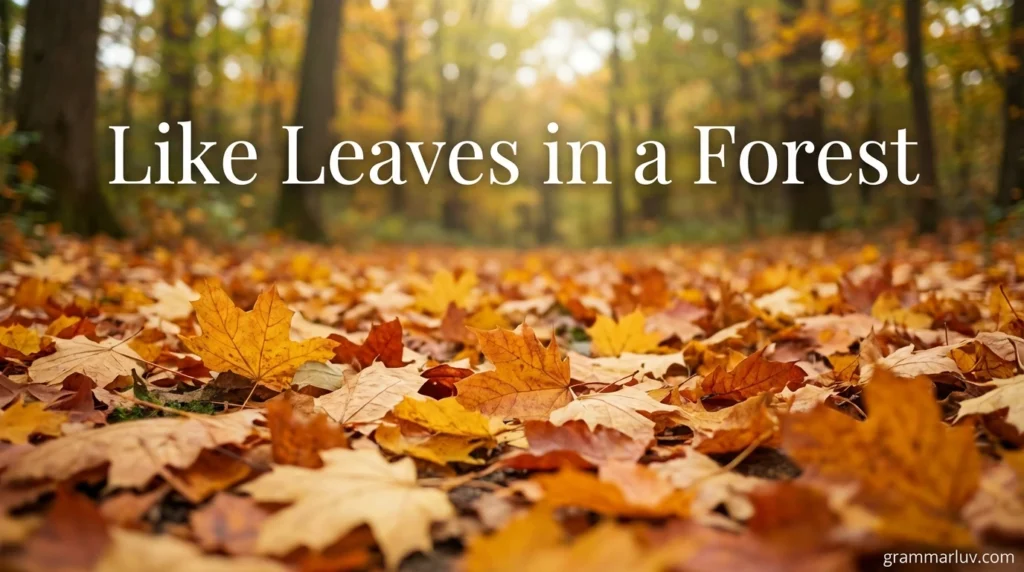
Meaning: Refers to abundance and natural overflow.
Tone: Nature-inspired, descriptive, calm.
Best Usage Context: Nature writing, environmental blogs, metaphors in stories.
Examples:
- “Opportunities grow like leaves in a forest—endless and abundant.”
- “Her memories were like leaves in a forest, dense and colorful.”
- “The evidence spread out like leaves in a forest.”
Like Stars in the Universe
Meaning: Highlights something vast and innumerable.
Tone: Inspirational, cosmic, awe-inspiring.
Best Usage Context: Motivational writing, science writing, poetry.
Examples:
- “Her talents were like stars in the universe, shining endlessly.”
- “Problems came like stars in the universe, scattered everywhere.”
- “Dreams are like stars in the universe; some you reach, many you chase.”
Like Bees in a Hive
Meaning: Suggests activity and sheer numbers.
Tone: Energetic, busy, lively.
Best Usage Context: Workplace descriptions, daily life, storytelling.
Examples:
- “People were buzzing like bees in a hive during the festival.”
- “Ideas flowed like bees in a hive, all working together.”
- “The kids in the playground moved like bees in a hive.”
Daily Use: “The office is busy like bees in a hive 🐝”
Like Raindrops in a Storm
Meaning: Implies a rapid, overwhelming abundance.
Tone: Dramatic, urgent, natural.
Best Usage Context: Writing about emotions, situations, or chaos.
Examples:
- “Messages poured in like raindrops in a storm.”
- “Problems hit him like raindrops in a storm.”
- “Her laughter filled the room like raindrops in a storm.”
Like Apples on a Tree
Meaning: Conveys plenty and ease of access.
Tone: Simple, cheerful, natural.
Best Usage Context: Everyday descriptions, farming or gardening content, metaphors.
Examples:
- “Opportunities are like apples on a tree—ready to be picked.”
- “Her gifts were like apples on a tree, plentiful and sweet.”
- “The kids picked flowers like apples on a tree.”
Like Clouds in the Sky
Meaning: Suggests uncountable numbers and ever-changing forms.
Tone: Light, airy, poetic.
Best Usage Context: Nature writing, reflective or romantic metaphors.
Examples:
- “Dreams floated above him like clouds in the sky.”
- “The mistakes were like clouds in the sky, covering everything.”
- “His thoughts drifted like clouds in the sky.”
Like Candies in a Jar
Meaning: Refers to a plentiful and inviting quantity.
Tone: Fun, playful, cheerful.
Best Usage Context: Light-hearted writing, children’s content, casual speech.
Examples:
- “She has ideas like candies in a jar—sweet and endless.”
- “Opportunities are like candies in a jar; pick as many as you want.”
- “The party had treats like candies in a jar.”
Like Leaves in the Wind
Meaning: Suggests abundance with movement and unpredictability.
Tone: Dynamic, descriptive, poetic.
Best Usage Context: Storytelling, descriptive writing, seasonal metaphors.
Examples:
- “News spread like leaves in the wind.”
- “His thoughts were like leaves in the wind, scattered everywhere.”
- “Leaves fell like leaves in the wind, uncontrollably.”
Like Drops of Water in the Ocean
Meaning: Denotes countless, seemingly insignificant items that together create vastness.
Tone: Thoughtful, poetic, reflective.
Best Usage Context: Metaphors about life, abundance, or collective effort.
Examples:
- “Each effort was like a drop of water in the ocean, but together they mattered.”
- “Mistakes are like drops of water in the ocean—too many to count.”
- “Dreams are like drops of water in the ocean, infinite and vast.”
Like Ants on a Hill
Meaning: Highlights numerous, busy, and often tiny elements.
Tone: Humorous, observational, lively.
Best Usage Context: Everyday life, office scenarios, storytelling.
Examples:
- “People were moving like ants on a hill at the market.”
- “Emails came in like ants on a hill.”
- “Her followers spread like ants on a hill.”
Like Flowers in a Meadow
Meaning: Suggests a large, visually appealing quantity.
Tone: Bright, cheerful, poetic.
Best Usage Context: Nature descriptions, creative writing, romantic imagery.
Examples:
- “Happiness was like flowers in a meadow, abundant and colorful.”
- “His ideas bloomed like flowers in a meadow.”
- “The marketplace was like flowers in a meadow, vibrant and lively.”
Like Sparks from a Fire
Meaning: Represents abundance with energy and movement.
Tone: Dynamic, intense, exciting.
Best Usage Context: Adventure writing, action scenes, motivational content.
Examples:
- “Excitement flew like sparks from a fire.”
- “Opportunities shot at him like sparks from a fire.”
- “Ideas ignited like sparks from a fire.”
Like Pebbles on a Riverbank
Meaning: Refers to a large, countable number.
Tone: Calm, descriptive, observational.
Best Usage Context: Nature writing, storytelling, reflective pieces.
Examples:
- “Memories lined up like pebbles on a riverbank.”
- “Problems came like pebbles on a riverbank.”
- “Stars in the night sky were like pebbles on a riverbank.”
Like Leaves in a Rainstorm
Meaning: Implies a chaotic, overwhelming number.
Tone: Dramatic, vivid, visual.
Best Usage Context: Storytelling, emotional writing, descriptive writing.
Examples:
- “Complaints fell like leaves in a rainstorm.”
- “Opportunities came like leaves in a rainstorm.”
- “Messages flooded in like leaves in a rainstorm.”
Like Coins in a Treasure Chest
Meaning: Suggests abundant value.
Tone: Positive, cheerful, imaginative.
Best Usage Context: Financial writing, storytelling, motivational content.
Examples:
- “His ideas were like coins in a treasure chest.”
- “Opportunities are like coins in a treasure chest—precious and numerous.”
- “The festival had gifts like coins in a treasure chest.”
Like Stars in a Galaxy
Meaning: Emphasizes massive, almost infinite abundance.
Tone: Cosmic, grand, awe-inspiring.
Best Usage Context: Science writing, motivational content, poetry.
Examples:
- “Knowledge is like stars in a galaxy—endless and brilliant.”
- “Opportunities are like stars in a galaxy, waiting to be discovered.”
- “Her talents were like stars in a galaxy, countless and bright.”
Like Grains in a Sand Dune
Meaning: Refers to innumerable, small items creating a huge whole.
Tone: Descriptive, poetic, natural.
Best Usage Context: Nature writing, metaphors for life or effort.
Examples:
- “His memories were like grains in a sand dune.”
- “Mistakes piled up like grains in a sand dune.”
- “Opportunities are like grains in a sand dune—endless.”
Like Berries on a Bush
Meaning: Suggests plentifulness that is ripe and desirable.
Tone: Cheerful, natural, inviting.
Best Usage Context: Food writing, cheerful storytelling, casual speech.
Examples:
- “Opportunities were like berries on a bush—ready to be picked.”
- “Her smiles were like berries on a bush, sweet and frequent.”
- “Ideas grew like berries on a bush.”
Like Clouds Before a Storm
Meaning: Implies an overwhelming, impending quantity.
Tone: Dramatic, tense, descriptive.
Best Usage Context: Storytelling, emotional or suspense writing.
Examples:
- “Problems gathered like clouds before a storm.”
- “Messages came like clouds before a storm.”
- “Thoughts piled up like clouds before a storm.”
Like Steps on a Mountain Trail
Meaning: Suggests numerous, sequential abundance.
Tone: Practical, natural, descriptive.
Best Usage Context: Travel writing, personal growth metaphors.
Examples:
- “Challenges appeared like steps on a mountain trail—countless and steep.”
- “Opportunities lined up like steps on a mountain trail.”
- “Her accomplishments were like steps on a mountain trail.”
Like Notes in a Symphony
Meaning: Refers to abundance in a structured, harmonious way.
Tone: Artistic, elegant, musical.
Best Usage Context: Creative writing, music metaphors, storytelling.
Examples:
- “Ideas flowed like notes in a symphony.”
- “Opportunities blended like notes in a symphony.”
- “Her thoughts were like notes in a symphony—numerous and harmonious.”
Like Pages in a Book
Meaning: Suggests countless, sequential items.
Tone: Educational, reflective, literary.
Best Usage Context: Writing, storytelling, education content.
Examples:
- “Her memories were like pages in a book.”
- “Stories were like pages in a book, endless and varied.”
- “Opportunities unfolded like pages in a book.”
Conclusion
Using similes for a lot elevates your writing, making it more vivid, relatable, and engaging. From nature-inspired images like “grains of sand on a beach” to cosmic metaphors like “stars in the galaxy,” each simile offers a unique way to express abundance. Incorporating these into your writing, daily conversations, or social media posts adds creativity and emotional depth, helping you connect more strongly with readers or listeners.
FAQs
What Are the Best Similes for a Lot?
Some of the most versatile similes include “like grains of sand on a beach,” “as many as stars in the sky,” and “like leaves in a forest,” as they are easily relatable and highly visual.
How Can I Use Similes in Everyday Conversation?
You can use them casually:
- “I have homework like grains of sand on a beach 😅”
- “Messages are coming like raindrops in a storm 🌧️”
Can Similes for a Lot Be Used in Professional Writing?
Yes, similes can enhance presentations, reports, and articles. Examples include:
- “Opportunities in the market are like stars in the universe.”
How Do I Make My Similes More Creative?
Use comparisons from nature, emotions, or everyday objects. Avoid clichés and combine unexpected ideas for originality.
Are Similes the Same as Metaphors?
No. Similes use “like” or “as” to compare, while metaphors directly state the comparison without those words.
How Do I Avoid Overusing Similes?
Use similes strategically. One strong simile per paragraph or idea is usually sufficient to make a vivid impact without overwhelming the reader.
Can I Use Similes in Texting and Social Media?
Absolutely. Similes make messages engaging and fun:
- “I’m tired like a bee after a full day 🐝”
- “My inbox is full like a treasure chest overflowing 💌”