
Language plays a powerful role in communication, and understanding word choices helps writers and speakers express themselves more accurately. Whether you are writing essays, engaging in creative writing, improving vocabulary, or learning English, selecting the right word for a specific situation enhances clarity and professionalism.
Figurative language, descriptive language, literary devices, metaphors, similes, and poetic expression all make writing more engaging. However, precise vocabulary is equally important. A small word choice can change tone, meaning, and audience perception. One common area of confusion for English learners is the distinction between restroom vs bathroom vs washroom. Although these terms often refer to similar places, they are used differently depending on region, context, and level of formality.
This comprehensive guide explains their meanings, differences, usage, sentence examples, common mistakes, writing tips, and practical exercises to help students, writers, and English learners communicate with confidence.
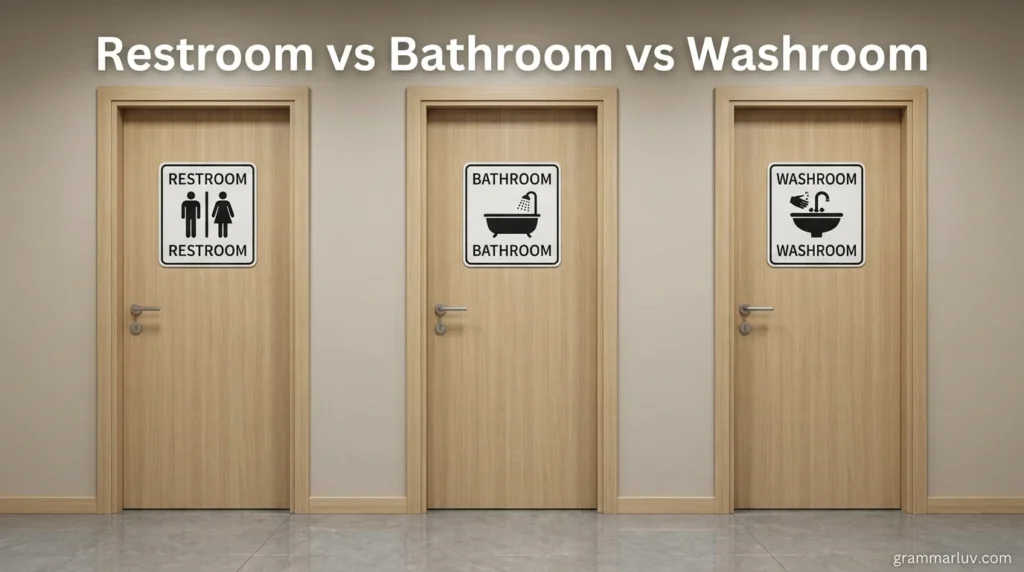
What Do Restroom, Bathroom, and Washroom Mean?
These three words generally refer to facilities used for personal hygiene and bodily functions. However, their usage varies across countries and situations.
TermPrimary MeaningCommon RegionRestroomPublic toilet facilityUnited StatesBathroomRoom containing a toilet and often a bath/showerUnited StatesWashroomRoom for washing and toilet useCanada and some Commonwealth countries
Although people often use these terms interchangeably, subtle differences exist.
Understanding the Meaning of Restroom
A restroom is typically a public facility found in places such as:
- Restaurants
- Airports
- Shopping malls
- Schools
- Offices
- Hotels
The word is considered polite and professional in American English.
Why Is It Called a Restroom?
Historically, public facilities sometimes included lounge areas where people could freshen up or briefly rest. Over time, the term became a polite substitute for “toilet.”
Sentence Examples
- Excuse me, where is the restroom?
- The restaurant’s restroom was clean and well-maintained.
- Visitors may use the restroom on the second floor.
- She stopped at a gas station to use the restroom.
Tone
- Polite
- Professional
- Formal enough for public settings
Understanding the Meaning of Bathroom
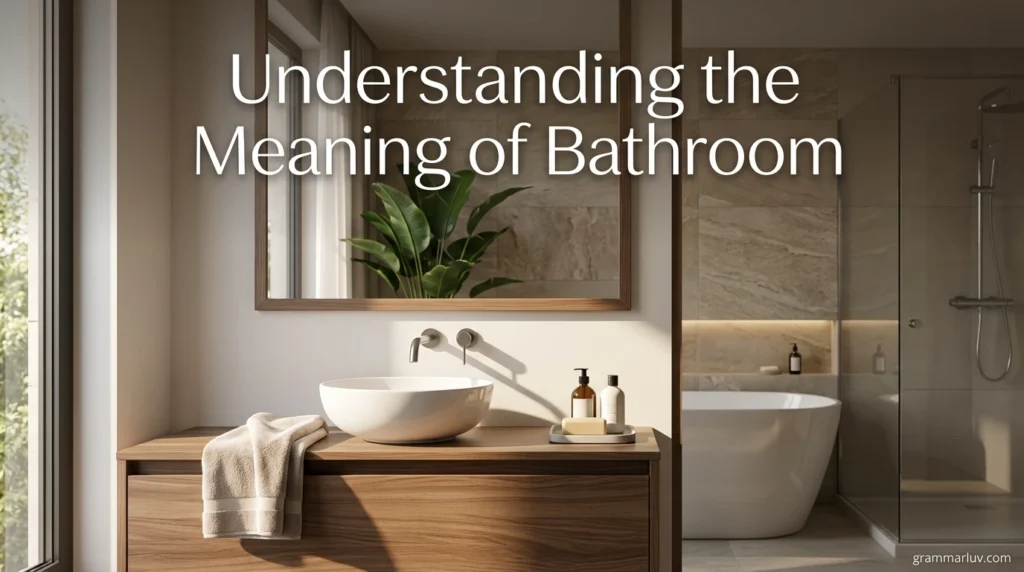
A bathroom usually refers to a room inside a home, apartment, or hotel that contains:
- A toilet
- A sink
- Often a bathtub or shower
In American English, people commonly use “bathroom” even when there is no bathtub present.
Sentence Examples
- The bathroom needs cleaning.
- I left my toothbrush in the bathroom.
- Their house has three bathrooms.
- May I use your bathroom?
Tone
- Neutral
- Everyday conversational
- Common in homes and private settings
Key Feature
A bathroom often implies a private room rather than a public facility.
Understanding the Meaning of Washroom
The term washroom is particularly common in Canada and some other English-speaking countries.
It generally refers to a room equipped for:
- Washing hands
- Using the toilet
- Personal hygiene
The word focuses on cleanliness and washing rather than bathing.
Sentence Examples
- The washroom is located near the entrance.
- Customers may use the washroom free of charge.
- She went to the washroom before the meeting.
- Please keep the washroom clean.
Tone
- Polite
- Neutral
- Frequently used in public places in Canada
Quick Comparison Table
FeatureRestroomBathroomWashroomUsually PublicYesSometimesYesCommon in HomesRarelyYesSometimesCommon in USAVery CommonVery CommonLess CommonCommon in CanadaLess CommonCommonVery CommonFocus on BathingNoOftenNoFormality LevelPoliteNeutralPolite
Regional Differences Around the English-Speaking World
Different countries prefer different terms.
United States
Americans commonly use:
- Restroom (public places)
- Bathroom (homes and casual situations)
Examples:
- Where is the restroom?
- Can I use your bathroom?
Canada
Canadians frequently use:
- Washroom
- Bathroom
Examples:
- Where is the washroom?
- The washroom is downstairs.
United Kingdom
People often say:
- Toilet
- Ladies’ room
- Gents’ room
Less commonly:
- Bathroom (for home use)
Australia and New Zealand
Common terms include:
- Toilet
- Bathroom
- Public amenities
Understanding regional differences helps English learners avoid confusion while traveling or communicating internationally.
When to Use Each Term
Use “Restroom” When:
- Speaking in American public settings
- Writing professional notices
- Asking politely in businesses
Examples:
- Where is the nearest restroom?
- The restroom is available to customers only.
Use “Bathroom” When:
- Referring to a room in a house
- Having casual conversations
- Discussing home design
Examples:
- The bathroom was recently renovated.
- She is cleaning the bathroom.
Use “Washroom” When:
- Communicating with Canadian audiences
- Referring to public facilities in Canada
- Using a polite alternative to “toilet”
Examples:
- The washroom is located behind the reception desk.
- Please ask staff for the washroom key.
When to Avoid Each Term
Choosing the wrong word may sound unnatural depending on the situation.
Avoid “Bathroom”
In some public locations where there is no bath or shower.
Less natural:
- The airport bathroom is on the third floor.
More precise:
- The airport restroom is on the third floor.
Avoid “Restroom”
When discussing home architecture.
Less natural:
- Our house has four restrooms.
More natural:
- Our house has four bathrooms.
Avoid “Washroom”
When writing for audiences unfamiliar with Canadian English.
Some readers may find “bathroom” or “restroom” more recognizable.
Restroom, Bathroom, and Washroom in Creative Writing
Writers should consider character background, setting, and tone.
Character-Based Usage
An American character might say:
“Where’s the restroom?”
A Canadian character might say:
“Where’s the washroom?”
A homeowner might say:
“The bathroom is upstairs.”
These subtle choices make dialogue more realistic.
Descriptive Language Example
Instead of writing:
The bathroom was dirty.
Try:
The bathroom smelled of damp towels, and the mirror was covered with cloudy fingerprints.
This descriptive language creates stronger imagery.
Figurative Language Examples Related to These Terms
Although restroom, bathroom, and washroom are literal words, they can appear in figurative language and creative expression.
Simile Examples
- The bathroom was as spotless as a hospital room.
- The restroom shone like polished silver.
- The washroom was as quiet as a library.
Metaphor Examples
- The bathroom was a sanctuary after a long day.
- The washroom became an oasis of calm.
- The restroom was a refuge from the crowded event.
Personification
- The bathroom mirror stared back silently.
- The restroom welcomed tired travelers.
- The washroom whispered comfort and privacy.
These literary devices enrich storytelling and improve writing skills.
Comparison Examples in Everyday Communication
Example 1: Restaurant
American English:
Excuse me, where is the restroom?
Canadian English:
Excuse me, where is the washroom?
Example 2: Home Visit
Natural:
May I use your bathroom?
Less Common:
May I use your restroom?
Example 3: Hotel
Acceptable:
Is there a bathroom in every room?
Acceptable:
Where is the public restroom?
Example 4: Shopping Mall
American:
The restroom is near the food court.
Canadian:
The washroom is near the food court.
Common Mistakes English Learners Make
Mistake 1: Using Bathroom Everywhere
Many learners use bathroom for every situation.
Example:
❌ Where is the bathroom in this airport?
Although understandable, Americans often prefer:
✅ Where is the restroom in this airport?
Mistake 2: Assuming All Terms Mean Exactly the Same Thing
Context matters.
A bathroom often implies a private room.
A restroom often implies a public facility.
Mistake 3: Ignoring Regional Differences
A term that sounds natural in one country may sound unusual in another.
Mistake 4: Overusing Direct Terms
In formal situations, “restroom” and “washroom” often sound more polite than simply saying “toilet.”
Vocabulary Enhancement: Related Words and Expressions
Learning related vocabulary improves fluency.
WordMeaningToiletFixture used for bodily functionsLavatoryFormal term for restroomPowder RoomSmall guest bathroomFacilitiesPolite public referenceLadies’ RoomWomen’s restroomMen’s RoomMen’s restroomPublic ConveniencePublic toilet facilityChanging RoomArea for changing clothes
Example Sentences
- The hotel provides modern facilities.
- The lavatory is located near the entrance.
- Guests may use the powder room downstairs.
Idioms and Expressions Connected to Privacy and Comfort
While no major idiom directly involves these words, related expressions are common.
“Freshen Up”
Meaning:
To wash or clean oneself before returning to an activity.
Example:
- I need to freshen up before dinner.
“Clean as a Whistle”
Meaning:
Extremely clean.
Example:
- The bathroom was clean as a whistle.
“Make Yourself at Home”
Meaning:
Feel comfortable and relaxed.
Example:
- Feel free to use the bathroom and make yourself at home.
Understanding idiom meaning helps learners sound more natural.
Practice Exercises for Students and English Learners
Exercise 1: Choose the Best Word
- The airport _____ is near Gate 12.
- Our house has two _____.
- The shopping center _____ is on the ground floor.
- May I use your _____?
Answers
- Restroom
- Bathrooms
- Restroom or Washroom
- Bathroom
Exercise 2: Rewrite Naturally
Original:
- Where is the bathroom in this mall?
Improved American English:
- Where is the restroom in this mall?
Exercise 3: Create Sentences
Write one sentence using:
- Restroom
- Bathroom
- Washroom
Then identify whether each sentence is formal, informal, public, or private.
Writing Skills Tips for Using These Words Correctly
Consider Audience
American readers expect:
- Restroom
- Bathroom
Canadian readers expect:
- Washroom
Match the Setting
Home:
- Bathroom
Public Building:
- Restroom or Washroom
Match Character Voice
In fiction, vocabulary should reflect:
- Nationality
- Region
- Education
- Social context
Use Descriptive Language
Rather than merely naming the room, describe:
- Appearance
- Smell
- Atmosphere
- Cleanliness
This strengthens creative writing and storytelling.
FAQs
1. Is a restroom the same as a bathroom?
Not always. A restroom usually refers to a public facility, while a bathroom often refers to a room in a home containing a toilet and bathing facilities.
2. Why do Canadians say washroom?
Canadian English traditionally favors “washroom” as a polite and widely accepted term for public toilet facilities.
3. Which term is most common in the United States?
Americans commonly use both “restroom” and “bathroom,” depending on the situation.
4. Is it wrong to say bathroom in a public place?
No. Most people will understand you, though “restroom” may sound more natural in many American public settings.
5. Which word should English learners use?
If speaking generally, “bathroom” is widely understood. For greater accuracy, use “restroom” for American public places and “washroom” in Canadian contexts.
Conclusion
Understanding the differences between restroom, bathroom, and washroom helps English learners, students, and writers communicate more naturally and accurately. While all three terms relate to personal hygiene facilities, their meanings vary according to context, region, and formality. A bathroom is commonly associated with homes and private spaces, a restroom is the preferred polite term in many American public settings, and a washroom is especially common in Canada.
Mastering these distinctions improves vocabulary enhancement, writing skills, descriptive language, and overall communication. Whether you are writing essays, creating realistic dialogue, studying English, or developing creative writing projects, choosing the appropriate term demonstrates language awareness and professionalism. By understanding regional preferences, avoiding common mistakes, and practicing with real-world examples, you can confidently use each term in the right situation.