
Introduction: Why Figurative Language Improves Writing and Communication
Strong writing is more than correct grammar and spelling. It also involves creativity, emotion, and clarity. Writers often use figurative language, descriptive language, literary devices, similes, metaphors, and poetic expression to make their message more engaging. Whether you are writing an essay, story, poem, speech, or professional document, choosing the right words helps readers connect with your ideas.
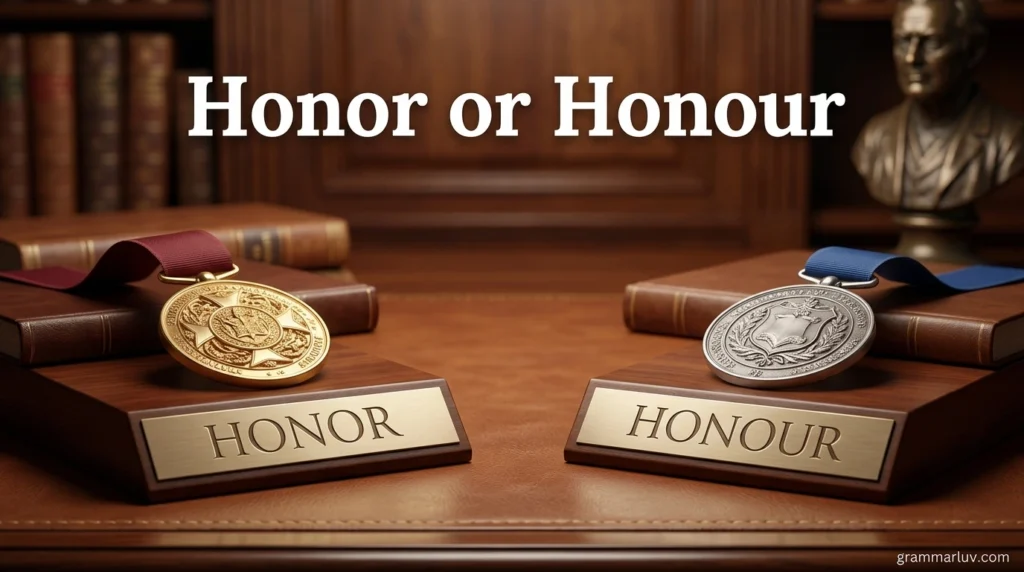
One common question among students, writers, and English learners is whether they should use honor or honour. The confusion arises because both spellings are correct, but they belong to different varieties of English. Understanding the distinction can improve writing skills, vocabulary enhancement, and communication accuracy.
This comprehensive guide explains the meaning, spelling differences, usage rules, sentence examples, common mistakes, exercises, and practical applications of these terms.
What Does Honor or Honour Mean?
The word refers to respect, integrity, admiration, dignity, or recognition given to someone because of their achievements, character, or actions.
Basic Definition
Honor/Honour can function as both a noun and a verb.
As a Noun
It means:
- High respect
- Good reputation
- Personal integrity
- Recognition for achievement
As a Verb
It means:
- To respect
- To recognize
- To celebrate
- To fulfill an obligation
Examples
Noun:
- It was a great honor to receive the award.
- She defended her family’s honour throughout difficult times.
Verb:
- The school honored its top students.
- The nation honoured the brave soldiers.
The Main Difference Between the Two Spellings
The meaning remains exactly the same. The difference is based on regional spelling conventions.
SpellingEnglish VarietyCommon RegionsHonorAmerican EnglishUnited StatesHonourBritish EnglishUnited Kingdom, Canada, Australia, New Zealand, Pakistan (often British influence)
Quick Rule
- Writing for an American audience → Use Honor
- Writing for a British or Commonwealth audience → Use Honour
Neither spelling is more correct than the other.
Historical Background of the Word
The word originates from the Latin word honor, meaning dignity, esteem, or respect.
Over centuries, English evolved differently in various regions.
American English Simplification
American spelling reforms led by Noah Webster simplified many words:
BritishAmericanHonourHonorColourColorFavourFavorLabourLabor
This is why modern American English usually drops the letter “u.”
Honor vs Honour Comparison Table
FeatureHonorHonourMeaningRespect, dignityRespect, dignityGrammarNoun and verbNoun and verbRegionAmerican EnglishBritish EnglishPronunciationSameSameFormalitySameSameAcademic UsageUS institutionsUK/Commonwealth institutions
Key Point
The pronunciation does not change. Only the spelling differs.
Using the Word as a Noun
As a noun, it represents respect, prestige, recognition, or ethical behavior.
Sentence Examples
- Winning the competition was a great honor.
- It is an honor to serve the community.
- Her honesty brought honor to the organization.
- Receiving the scholarship was a tremendous honour.
- The soldier fought with honour and courage.
Academic Examples
- The student graduated with honors.
- Academic honours were awarded to outstanding performers.
Professional Examples
- The company received an honor for innovation.
- The organization earned national honours for public service.
Using the Word as a Verb
As a verb, it means showing respect, recognition, or fulfilling commitments.
Sentence Examples
- The university honored its distinguished alumni.
- We honor the sacrifices made by our ancestors.
- The museum honored the artist with a special exhibition.
- The community honoured local volunteers.
- The government honoured scientists for their contributions.
Business Context
- The company honored the contract.
- The retailer honored the discount coupon.
Formal Context
- Citizens honor national traditions.
- Leaders honour important cultural values.
Figurative Language and Creative Writing Applications
Writers often use this word in figurative language to create emotional impact.
Metaphor Examples
A metaphor directly compares two things without using “like” or “as.”
Examples:
- Honor is the crown of character.
- Her honour was a shield against criticism.
- Integrity is the foundation upon which honor stands.
Simile Examples
A simile compares using “like” or “as.”
Examples:
- His honor was as strong as steel.
- She guarded her honour like a priceless treasure.
- Their reputation shone like a badge of honor.
Poetic Expression
Poets frequently use the concept to symbolize:
- Virtue
- Courage
- Loyalty
- Sacrifice
Example:
Honor walks beside the brave, Guiding hearts they strive to save.
Descriptive Language Examples
- unwavering honor
- noble honour
- enduring honor
- distinguished honour
- sacred honor
These phrases enrich creative writing and strengthen imagery.
Literary Devices Associated with the Word
Many literary devices can incorporate this concept.
Symbolism
Honor often symbolizes:
- Morality
- Integrity
- Heroism
Personification
Giving human qualities to abstract ideas.
Examples:
- Honor whispered guidance into his heart.
- Honour stood proudly beside justice.
Hyperbole
Intentional exaggeration.
Examples:
- She would cross a thousand oceans to protect her honor.
- His honour was brighter than a thousand suns.
Alliteration
Repeating beginning sounds.
Examples:
- Honorable hearts hold hope.
- Noble honour nurtures nations.
These literary devices make writing more memorable and engaging.
When to Use Honor or Honour
Use Honor When
- Writing for American readers
- Following US style guides
- Publishing in American journals
- Creating content for US businesses
Use Honour When
- Writing for British audiences
- Following UK educational standards
- Publishing in Commonwealth countries
- Using British English spelling consistently
Important Tip
Consistency matters more than preference.
Avoid mixing styles in the same document.
Incorrect
- The student received an honour for academic honor.
Correct
American style:
- The student received an honor for academic honor.
British style:
- The student received an honour for academic honour.
Common Idioms and Expressions
Understanding idiom meaning helps improve fluency.
On My Honor
Meaning: I promise truthfully.
Example:
- On my honor, I did not break the vase.
In Honor Of
Meaning: To celebrate or recognize someone.
Example:
- The event was organized in honor of the founder.
Honor Among Thieves
Meaning: Even dishonest people may follow certain rules.
Example:
- The story explores the idea of honor among thieves.
Do Someone the Honor
Meaning: To show respect by accepting an invitation.
Example:
- Would you do us the honor of attending?
Common Mistakes Students and Writers Make
1. Mixing British and American Spellings
Incorrect:
- The organization honored individuals for their honour.
Correct:
- Choose one style and remain consistent.
2. Confusing Honor with Honesty
Honor:
- Reputation and respect
Honesty:
- Truthfulness
Example:
- Her honesty earned her honor.
3. Using the Wrong Regional Style
Always consider your audience.
4. Forgetting Context
Honor can mean:
- Respect
- Award
- Integrity
- Recognition
Choose the meaning that fits the sentence.
5. Incorrect Verb Forms
Correct forms:
Base FormPast TensePast ParticipleHonorHonoredHonoredHonourHonouredHonoured
Vocabulary Enhancement: Related Words and Synonyms
Learning related vocabulary improves writing quality.
Synonyms
- Respect
- Esteem
- Dignity
- Reputation
- Integrity
- Recognition
- Tribute
- Glory
- Prestige
- Admiration
Related Terms
WordMeaningRespectAdmirationIntegrityMoral honestyDignityWorthinessReputationPublic opinionLoyaltyFaithfulnessVirtueMoral excellence
Comparison Examples
WordFocusHonorRespect and recognitionRespectAdmirationIntegrityMoral principlesGloryFame and achievement
Practical Sentence Examples for Different Tones
Formal Tone
- It is an honor to address this distinguished audience.
- The institution honoured exceptional academic achievement.
Academic Tone
- The researcher’s work brought honor to the university.
- Academic honours recognize outstanding scholarly performance.
Professional Tone
- We honor our commitments to clients.
- The company was honoured for excellence in service.
Casual Tone
- It was an honor meeting you.
- I feel honoured to be part of the team.
Creative Writing Tone
- Honor burned within him like an eternal flame.
- Her honour stood firm against every storm.
Practice Exercises for English Learners
Exercise 1: Choose the Correct Spelling
- The university awarded an (honor/honour).
- The nation (honored/honoured) its veterans.
- It was a great (honor/honour) to attend.
Answers
- Either, depending on style
- Either, depending on style
- Either, depending on style
Exercise 2: Identify the Literary Device
- Honor is a shining crown.
- His honor was like gold.
- Honour whispered wisdom.
Answers
- Metaphor
- Simile
- Personification
Exercise 3: Rewrite in British English
American:
- The school honored students with academic honors.
British:
- The school honoured students with academic honours.
Quick Reference Summary Table
QuestionAnswerSame meaning?YesSame pronunciation?YesAmerican spelling?HonorBritish spelling?HonourCan be noun and verb?YesFormal word?YesCommon in creative writing?Yes
FAQs
1. Is one spelling more correct than the other?
No. Both are correct. The choice depends on whether you are using American or British English.
2. Which spelling should students use?
Follow the spelling style required by your school, university, or audience.
3. Do they have different meanings?
No. Both words carry the same meaning and pronunciation.
4. Is the word used in creative writing?
Yes. It appears frequently in stories, poetry, speeches, and historical writing because it conveys dignity, respect, and moral values.
5. How can I avoid mistakes?
Choose one English variety and use it consistently throughout your writing.
Conclusion
Understanding the distinction between these two spellings helps students, writers, and English learners communicate more effectively. The difference is purely regional: American English prefers “honor,” while British English uses “honour.” Since the meaning, pronunciation, and grammatical functions remain identical, the most important rule is consistency.
Beyond spelling, this word plays a significant role in descriptive language, creative writing, figurative language, literary devices, metaphors, similes, and poetic expression. Mastering its usage enhances vocabulary, strengthens writing skills, and helps create more polished academic, professional, and creative content. Whether you are composing essays, stories, speeches, or business documents, using the correct spelling for your audience will make your writing more accurate and professional.