
Introduction: Why Figurative Language and Precise Word Choice Matter
Effective communication depends on selecting the right words. Whether you’re writing an academic essay, creating a story, composing poetry, or simply having a conversation, word choice directly affects how clearly your message is understood.
Figurative language adds color and depth to writing through literary devices such as metaphors, similes, personification, and symbolism. These techniques make ideas memorable and engaging. However, even excellent creative writing can lose credibility when commonly confused words are used incorrectly.
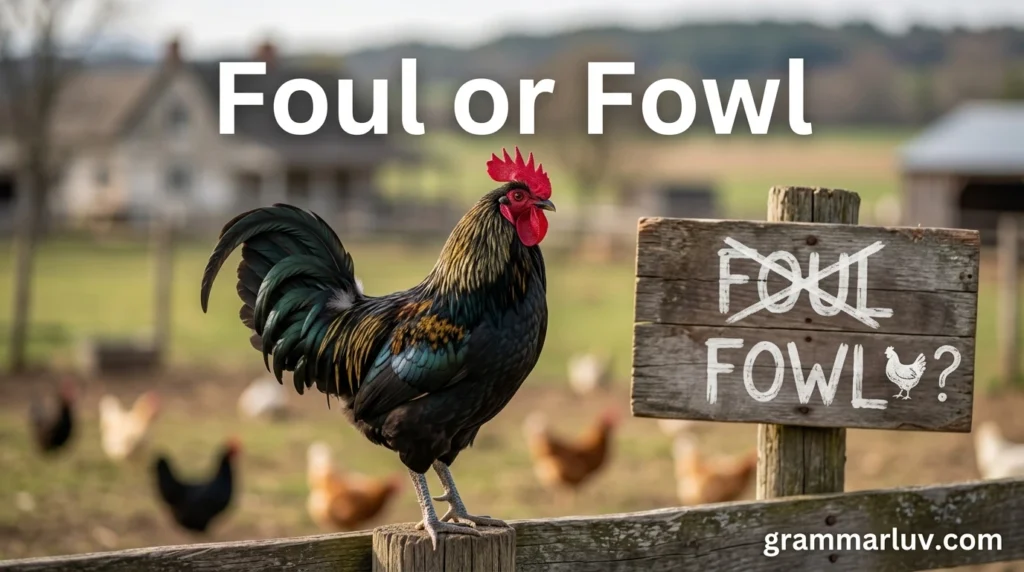
One of the most frequently misunderstood word pairs in English is foul or fowl. Although they sound identical, they have completely different meanings and applications. Understanding their differences can improve writing skills, vocabulary enhancement, descriptive language, and overall language confidence.
This guide explores meanings, usage rules, sentence examples, comparison examples, common mistakes, exercises, and practical tips for students, writers, and English learners.
What Does “Foul” Mean?
The word foul generally describes something unpleasant, offensive, unfair, dirty, or against established rules.
Common Definitions
MeaningExampleDirty or filthyA foul odor came from the trash can.OffensiveThe audience objected to his foul language.Against the rulesThe referee called a foul.Suspicious or criminalPolice suspected foul play.
Characteristics of Foul
- Usually carries a negative meaning.
- Common in sports terminology.
- Often describes behavior, smells, weather, language, or actions.
- Frequently appears in formal and informal writing.
Sentence Examples
- The kitchen had a foul smell after the food spoiled.
- The player received a penalty for committing a foul.
- Witnesses suspected foul play in the incident.
- The storm brought foul weather across the region.
- Teachers discourage students from using foul language.
What Does “Fowl” Mean?
The word fowl refers to birds, especially domesticated birds raised for food or eggs.
Common Definitions
MeaningExampleDomestic birdThe farmer raised fowl on his land.PoultryChickens are common fowl.Wild game birdsHunters searched for waterfowl.
Types of Fowl
- Chickens
- Ducks
- Turkeys
- Geese
- Quail
- Pheasants
Sentence Examples
- The farmer keeps various types of fowl.
- Ducks are considered waterfowl.
- Fresh fowl was sold at the local market.
- The family raises fowl for eggs and meat.
- Several wild fowl migrated south for winter.
Quick Comparison Table

FeatureFoulFowlMeaningDirty, offensive, unfair, against rulesBirds, especially poultryPart of SpeechAdjective, noun, verbNounUsage ContextSports, behavior, smells, weatherFarming, birds, wildlifeConnotationUsually negativeNeutralExampleA foul odor filled the room.The farmer raises fowl.
Why People Confuse These Words
The primary reason these words are confused is that they are homophones.
What Is a Homophone?
Homophones are words that:
- Sound the same
- Have different spellings
- Have different meanings
Examples include:
Word PairMeaning DifferenceTheir / TherePossession vs LocationFlour / FlowerBaking ingredient vs PlantKnight / NightWarrior vs EveningFoul / FowlOffensive vs Bird
Because pronunciation is identical, writers often rely on context to determine the correct spelling.
Using Foul in Everyday Communication
The word “foul” appears frequently in daily speech and writing.
Sports Usage
In sports, a foul is a violation of rules.
Examples:
- The basketball player committed a personal foul.
- The striker earned a penalty after a foul.
- Multiple fouls affected the game’s outcome.
Language Usage
When referring to offensive speech:
- He was warned for using foul language.
- Parents often discourage foul expressions.
Weather Usage
Examples:
- Foul weather delayed the event.
- Sailors remained at port because of foul conditions.
Crime and Investigation Usage
Examples:
- Authorities suspect foul play.
- Detectives investigated possible foul conduct.
Using Fowl in Everyday Communication

Although less common in casual conversation, “fowl” remains important in agriculture, cooking, and wildlife discussions.
Agriculture
Examples:
- Farmers raise fowl for commercial production.
- Proper housing protects fowl from predators.
Cooking
Examples:
- Roasted fowl is a traditional holiday meal.
- Different types of fowl require different cooking methods.
Wildlife
Examples:
- Wetlands attract migratory fowl.
- Conservation efforts protect endangered waterfowl.
Foul and Fowl in Creative Writing
Creative writing depends heavily on descriptive language and accurate vocabulary.
Descriptive Example with Foul
“The foul odor drifted through the abandoned hallway like a warning from the past.”
Descriptive Example with Fowl
“A lone fowl glided across the misty lake beneath the morning sun.”
These examples show how a single word choice creates completely different imagery.
Figurative Language Examples Using Foul
Figurative language strengthens writing by creating vivid mental images.
Simile Examples
- His mood was as foul as a stormy sky.
- The smell lingered like a foul cloud.
Metaphor Examples
- Her words were a foul poison spreading through the crowd.
- Corruption became a foul stain on the organization.
Personification Examples
- The foul wind screamed through the trees.
- A foul shadow seemed to follow him everywhere.
Poetic Expression
Poets often use “foul” symbolically to represent:
- Evil
- Decay
- Corruption
- Misfortune
- Conflict
Idioms and Common Expressions
Expressions with Foul
ExpressionMeaningFoul playCriminal or dishonest actionFoul languageOffensive speechCry foulProtest unfair treatmentFoul moodBad temperFoul weatherSevere weather
Example Sentences
- The company cried foul after the decision.
- Investigators ruled out foul play.
- He arrived in a foul mood.
- Travelers faced foul weather conditions.
Expressions Related to Fowl
There are fewer idioms using “fowl,” but it appears in:
- Waterfowl
- Game fowl
- Domestic fowl
Common Mistakes and How to Avoid Them
Mistake 1: Using Fowl for Bad Behavior
❌ He used fowl language.
✅ He used foul language.
Mistake 2: Using Foul for Birds
❌ The farmer raises foul.
✅ The farmer raises fowl.
Mistake 3: Confusing Sports Terminology
❌ The referee called a fowl.
✅ The referee called a foul.
Memory Trick
Think:
- Foul = Fault or Fairness issues
- Fowl = Feathered bird
The letter “W” in fowl can remind you of wings.
When to Use Foul
Use “foul” when discussing:
- Bad smells
- Offensive language
- Sports violations
- Unfair actions
- Criminal suspicion
- Poor weather
- Negative attitudes
Examples
- A foul odor spread through the building.
- The player committed a foul.
- Police investigated foul play.
When to Use Fowl
Use “fowl” when discussing:
- Birds
- Poultry
- Farming
- Wildlife
- Hunting
- Cooking
Examples
- The farmer raises several types of fowl.
- Wild fowl migrated for the season.
- The chef prepared roasted fowl.
Practice Exercises
Exercise 1
Choose the correct word.
- The referee called a _____.
- The lake attracted migratory _____.
- A _____ smell came from the drain.
- The farmer sells domestic _____.
- Detectives investigated possible _____ play.
Answers
- foul
- fowl
- foul
- fowl
- foul
Exercise 2
Correct the mistakes.
- The hunter searched for foul.
- She complained about fowl language.
- The referee called a fowl.
- The farmer owns many foul.
Correct Answers
- The hunter searched for fowl.
- She complained about foul language.
- The referee called a foul.
- The farmer owns many fowl.
How Learning Similar Words Improves Writing Skills
Understanding commonly confused words provides several benefits:
Better Vocabulary
Writers become more precise and professional.
Improved Clarity
Readers immediately understand intended meanings.
Stronger Academic Writing
Accurate word choice improves essays and reports.
Enhanced Creative Writing
Stories become more vivid and believable.
Greater Language Confidence
English learners communicate more effectively.
FAQs
1. What is the difference between foul and fowl?
Foul refers to something unpleasant, offensive, unfair, or against rules, while fowl refers to birds, especially poultry.
2. Are foul and fowl pronounced the same?
Yes. They are homophones and share the same pronunciation.
3. Which word is used in sports?
Foul is the correct term for a rule violation in sports.
4. Is a chicken considered a fowl?
Yes. Chickens are one of the most common examples of domestic fowl.
5. What does “foul play” mean?
Foul play refers to criminal, dishonest, or suspicious behavior that may have caused harm.
Conclusion
Understanding the difference between foul and fowl is an important step toward mastering English vocabulary and improving communication skills. While these homophones sound exactly alike, their meanings are entirely different. “Foul” is associated with unpleasant conditions, offensive behavior, unfair actions, and sports violations, whereas “fowl” refers to birds, poultry, and wildlife species.
By studying definitions, comparison examples, sentence examples, idiom meaning, figurative language applications, simile examples, metaphor examples, and common mistakes, students and writers can avoid confusion and communicate with greater accuracy. Strong vocabulary, careful word choice, and descriptive language not only improve academic and professional writing but also make creative writing and poetic expression more engaging and effective.