
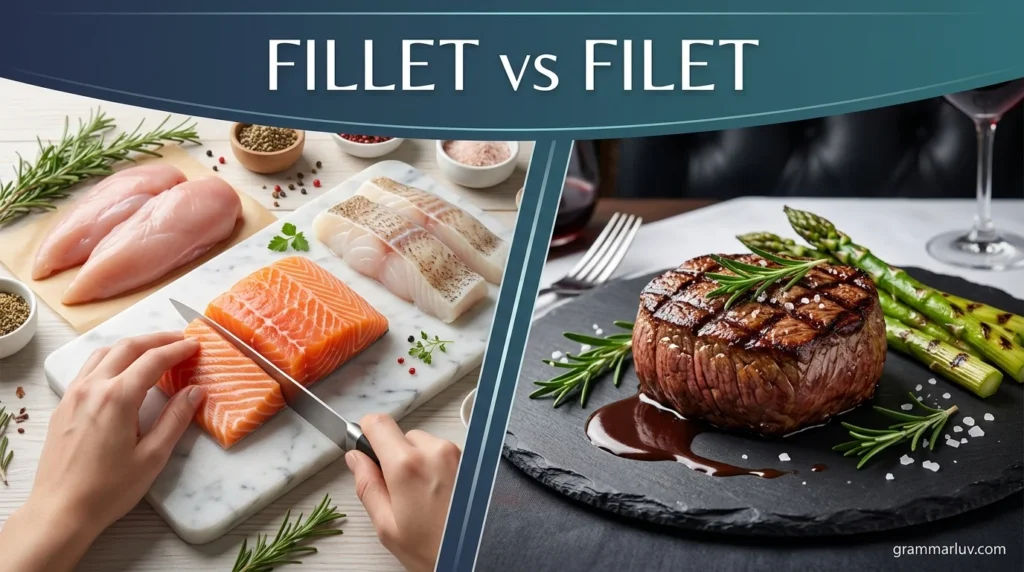
Figurative language plays a powerful role in writing and communication. It helps writers create vivid imagery, express emotions, and make ideas more memorable. Whether you’re crafting a story, writing an essay, improving your vocabulary, or learning English, understanding subtle word differences strengthens your communication skills. One such commonly confused pair is fillet vs filet. Although these words often refer to the same thing, their usage varies depending on context, region, and style.
This comprehensive guide explains the meanings, differences, examples, writing applications, common mistakes, and practical exercises to help students, writers, and English learners use these terms confidently.
What Do Fillet and Filet Mean?
Both fillet and filet generally refer to a boneless piece of meat, fish, or poultry.
Fillet Definition
A fillet is a strip or slice of meat or fish that has been removed from the bones.
Examples:
- The chef prepared a salmon fillet with herbs.
- She ordered a chicken fillet sandwich.
- The fish fillet was grilled to perfection.
Filet Definition
Filet is the French spelling of the same word and is commonly used in culinary contexts, particularly in the United States.
Examples:
- He ordered a filet mignon for dinner.
- The restaurant specializes in premium beef filets.
- The filet was served with roasted vegetables.
Quick Comparison Table
FeatureFilletFiletOriginEnglish adaptationOriginal French spellingMeaningBoneless cut of meat or fishSame meaningCommon in UKVery commonLess commonCommon in USCommon for fish and general usagePopular in restaurant menusPronunciationFIL-itfi-LAY (often in culinary contexts)Formal Culinary UseAcceptedFrequently preferred
The History and Origin of the Words
The word originates from the French term filet, meaning a thread, strip, or narrow piece.
As English evolved, the spelling fillet became widely accepted. Over time:
- British English favored fillet.
- American culinary traditions retained filet for certain dishes.
- Both forms entered modern dictionaries.
Today, both spellings are considered correct depending on context.
How Fillet and Filet Are Used in Everyday Language
Food and Cooking
The most common usage appears in culinary settings.
Examples:
- Grilled fish fillet
- Beef fillet steak
- Filet mignon
- Chicken fillet burger
Restaurant Menus
Restaurants often prefer the French spelling because it appears elegant and sophisticated.
Examples:
- Filet mignon with garlic butter
- Center-cut beef filet
- Tenderloin filet special
Grocery Stores
Packaging may vary by region:
- Fish fillet
- Chicken fillet
- Beef filet
All are generally understood by consumers.
Pronunciation Differences
Pronunciation can sometimes reveal intended meaning.
WordCommon PronunciationFilletFIL-itFiletfi-LAY
Sentence Examples
- The salmon fillet was seasoned with lemon.
- She enjoyed a tender filet at the steakhouse.
- The chef expertly sliced the beef filet.
- The fish fillet was lightly breaded.
Regional differences may influence pronunciation.
Fillet and Filet in Writing and Communication
Writers should consider audience and context when choosing between the terms.
Academic Writing
In educational and technical writing, consistency matters.
Recommended:
- Use fillet throughout a document.
- Follow regional style guidelines.
Culinary Writing
Food blogs, recipes, and restaurant reviews may use either spelling.
Examples:
- Pan-seared salmon fillet
- Classic filet mignon recipe
Creative Writing
Writers often choose words that fit tone and setting.
Example:
“The waiter presented a perfectly cooked filet, its aroma filling the room.”
Figurative Language and Descriptive Language Applications
Although these words are primarily literal, they can occasionally appear in figurative language.
Metaphor Examples
A metaphor compares one thing directly to another.
Examples:
- His confidence was a perfectly trimmed fillet, free of doubt.
- The speech was a filet of wisdom served to the audience.
Simile Examples
A simile uses “like” or “as.”
Examples:
- Her argument was as precise as a chef preparing a fillet.
- The presentation flowed like a carefully sliced filet.
Poetic Expression
Writers sometimes use food imagery for sensory appeal.
Example:
“The moon hung in the sky like a silver fillet cut from the night.”
These examples demonstrate vocabulary enhancement and creative expression.
Literary Devices and Stylistic Usage
Writers may incorporate culinary imagery through various literary devices.
Imagery
Creates sensory experiences.
Example:
“The sizzling fillet released an aroma that filled the kitchen.”
Symbolism
Food can symbolize luxury, comfort, or celebration.
Example:
“The filet on the table symbolized success after years of struggle.”
Personification
Giving human qualities to objects.
Example:
“The fillet danced in the skillet as the butter melted.”
These techniques enrich descriptive language and writing skills.
Categorized Sentence Examples
Basic Examples
- I bought a salmon fillet for dinner.
- The chef recommended the filet special.
- She grilled the chicken fillet perfectly.
- The restaurant serves premium beef filet.
Intermediate Examples
- The fish fillet absorbed the flavors of the marinade.
- A tender filet was the highlight of the meal.
- He learned how to fillet a fish during cooking class.
- The chef plated the filet elegantly.
Advanced Examples
- The delicate fillet showcased the chef’s mastery of technique.
- Their signature filet attracted diners from around the city.
- The perfectly prepared fillet reflected exceptional culinary standards.
- The restaurant’s renowned filet became a symbol of luxury dining.
Tone and Style Considerations
Different spellings can influence tone.
ContextRecommended ChoiceBritish EnglishFilletEducational WritingFilletRestaurant MenusFiletFrench Cuisine DiscussionsFiletGeneral English UsageFillet
Formal Tone
- The salmon fillet was prepared according to traditional methods.
Informal Tone
- I had an amazing fish fillet for lunch.
Elegant or Gourmet Tone
- The filet was accompanied by truffle-infused potatoes.
When to Use Each Word
Use Fillet When:
Examples:
- Tuna fillet
- Chicken fillet
- Fish fillet recipe
Use Filet When:
Examples:
- Filet mignon
- Beef filet entrée
- Center-cut filet
When to Avoid Each Word
Avoid Fillet
- When referring specifically to a French culinary dish traditionally spelled filet.
- When matching restaurant menu branding.
Avoid Filet
- In formal British English writing.
- When consistency requires standard English spelling.
Better Practice
Choose one style and remain consistent throughout your writing.
Common Mistakes and How to Fix Them
Mistake 1: Assuming They Have Different Meanings
❌ Fillet means fish, filet means beef.
✅ Both can refer to boneless cuts of meat or fish.
Mistake 2: Mixing Spellings Randomly
❌ The fish fillet and beef filet were excellent.
✅ Use one style consistently unless referring to a specific dish.
Mistake 3: Mispronouncing Every Usage
❌ Pronouncing all instances as “fi-LAY.”
✅ Pronunciation depends on context and regional preference.
Mistake 4: Ignoring Audience Expectations
❌ Using filet throughout a British academic paper.
✅ Use fillet in standard British English.
Vocabulary Enhancement and Related Terms
Expanding your vocabulary helps improve writing and reading comprehension.
Related Culinary Terms
WordMeaningTenderloinTender cut of beefSteakSlice of beefCutletThin piece of meatPortionServing sizeCuisineStyle of cookingEntréeMain courseGourmetHigh-quality foodDelicacySpecial food item
Related Writing Terms
TermPurposeFigurative languageCreates imageryMetaphorDirect comparisonSimileComparison using like/asImagerySensory descriptionSymbolismRepresents larger ideasDescriptive languageAdds detail and color
Practice Exercises
Exercise 1: Fill in the Blank
- The chef prepared a grilled salmon ______.
- The restaurant’s signature ______ mignon is famous.
- She ordered a chicken ______ sandwich.
- The beef ______ was cooked medium rare.
Answers:
- fillet
- filet
- fillet
- filet
Exercise 2: Choose the Best Option
- British cookbook:
- A) Filet
- B) Fillet
Answer: B
- French-inspired steakhouse menu:
- A) Filet
- B) Fillet
Answer: A
Exercise 3: Create Your Own Sentences
Write:
- One sentence using fillet literally.
- One sentence using filet literally.
- One metaphor using either word.
- One simile using either word.
This exercise strengthens creative writing and vocabulary skills.
- Season the salmon fillet with herbs.
- Grill the beef filet for six minutes per side.
Writers often alternate usage based on audience and publication style.
FAQs
1. Is fillet the same as filet?
Yes. Both refer to a boneless cut of meat or fish, though spelling preferences vary by context and region.
2. Which spelling is more common in British English?
Fillet is the standard spelling in British English.
3. Why is filet used on restaurant menus?
The French spelling often creates a refined and upscale culinary impression.
4. Is filet mignon different from a fillet?
Filet mignon is a specific cut of beef, while fillet is a broader term for boneless cuts of meat or fish.
5. Can I use either spelling in my writing?
Yes, but consistency and audience expectations should guide your choice.
Conclusion
Understanding the distinction between fillet and filet improves vocabulary, writing accuracy, and communication skills. While both words share the same fundamental meaning—a boneless cut of meat or fish—their usage depends largely on region, audience, and context. Fillet is generally preferred in standard English, especially in British usage, while filet often appears in culinary settings and restaurant menus, particularly when referencing French cuisine.
For students, writers, and English learners, mastering such subtle word differences enhances descriptive language, strengthens writing skills, and promotes clearer communication. Whether you’re composing essays, creating food-related content, practicing creative writing, or studying English vocabulary, choosing the appropriate term helps your writing appear more polished, professional, and precise.