
Introduction: Why Word Choice and Figurative Language Matter in Effective Writing
Strong writing is about more than correct grammar and spelling. It involves selecting the right words, creating vivid imagery, and communicating ideas clearly. One of the most powerful ways to improve communication is through figurative language, which helps writers express ideas creatively and memorably. Whether using similes, metaphors, imagery, personification, or poetic expression, effective language choices make writing more engaging for readers.
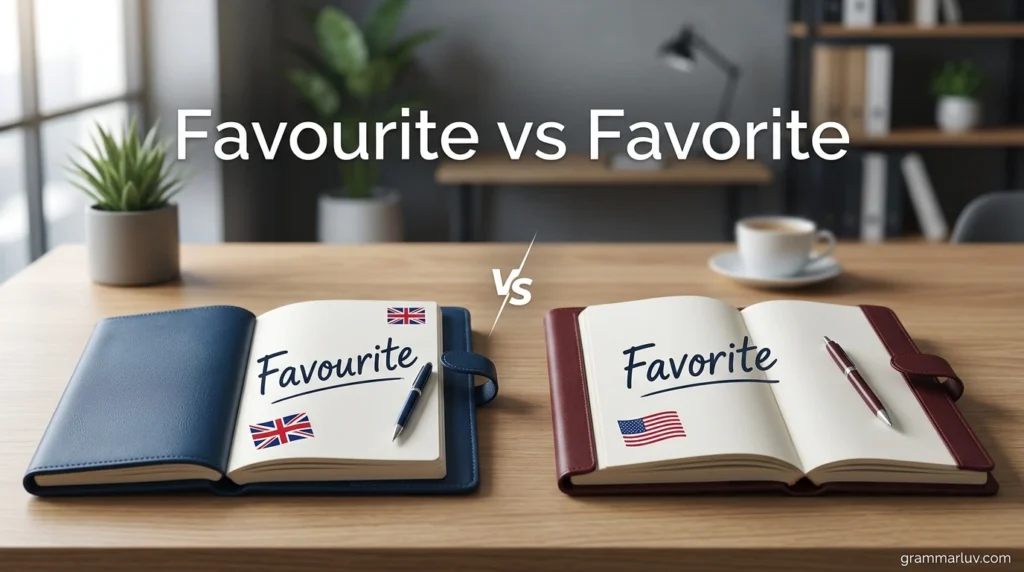
Students, writers, and English learners often encounter words that have multiple accepted spellings. One of the most common examples is the difference between the British and American spellings of a word that means a preferred person, thing, or choice. Understanding these spelling variations can improve writing skills, strengthen vocabulary, and help writers communicate appropriately with different audiences.
This comprehensive guide explains the meaning, usage, examples, differences, common mistakes, writing tips, exercises, and frequently asked questions related to these two spellings.
What Do These Words Mean?
Both spellings refer to something or someone that is preferred above all others.
Definition
The word can be used as:
- A noun referring to a preferred person or thing
- An adjective describing a preferred choice
- A term for a competitor expected to win
Examples
- Chocolate is my favorite dessert.
- Blue is her favourite color.
- That book is my favorite novel.
- The horse is the favourite to win the race.
Regardless of spelling, the meaning remains exactly the same.
Favourite vs Favorite: The Main Difference
The difference between the two spellings is entirely regional.
FeatureFavouriteFavoriteMeaningPreferred choicePreferred choicePronunciationSameSameGrammarSameSameBritish EnglishStandardRareAmerican EnglishRareStandardFormal WritingAccepted in UKAccepted in US
The choice depends on the audience and the variety of English being used.
Historical Origins of the Spellings

The word traces its roots to the Latin term favor, meaning support, goodwill, or approval.
Over time, spelling conventions evolved differently in Britain and America.
British English Development
British English retained spellings influenced by French and Latin traditions. As a result, many words kept the letter “u.”
Examples include:
- Favourite
- Colour
- Honour
- Neighbour
American English Development
American lexicographer Noah Webster promoted spelling simplification in the United States.
Examples include:
- Favorite
- Color
- Honor
- Neighbor
These simplified spellings eventually became the standard in American English.
When to Use Favourite
Use favourite when writing for audiences that follow British English conventions.
Common Situations
Academic Writing in the UK
- Shakespeare is my favourite playwright.
British Publications
- The favourite candidate won the election.
Australian Writing
- Cricket is Australia’s favourite sport.
New Zealand and South Africa
- My favourite holiday destination is Queenstown.
Tone and Style
This spelling often appears:
- Traditional
- British
- International
- Formal in UK contexts
When to Use Favorite
Use favorite when writing for American audiences.
Common Situations
School Assignments in the United States
- Science is my favorite subject.
American Business Writing
- This remains our customers’ favorite product.
Marketing Content
- Discover America’s favorite travel destinations.
Blogs and Websites
- Here are my favorite books of the year.
Tone and Style
This spelling typically feels:
- American
- Familiar
- Modern
- Appropriate for US readers
Sentence Examples in Different Contexts
Learning through examples helps reinforce proper usage.
Personal Preferences
British English:
- My favourite movie is a classic comedy.
- Her favourite color is purple.
American English:
- My favorite movie is a classic comedy.
- His favorite color is blue.
Education
British:
- Mathematics is her favourite subject.
American:
- Mathematics is her favorite subject.
Sports
British:
- The favourite team won the championship.
American:
- The favorite player scored the winning goal.
Literature
British:
- Dickens remains my favourite novelist.
American:
- Twain remains my favorite novelist.
Using the Word in Creative Writing
Creative writing relies heavily on figurative language and descriptive language. These words often appear when writers describe cherished people, memories, objects, or experiences.
Metaphor Examples
- Her favorite book was a lighthouse guiding her through difficult times.
- His favourite song became a bridge to the past.
Simile Examples
- The favorite painting sparkled like a jewel.
- Her favourite dress fit like a dream.
Personification
- My favorite notebook patiently waited for new ideas.
- His favourite guitar sang throughout the night.
Hyperbole
- That is my favorite meal in the entire universe.
Poetic Expression
- My favourite memory blooms like a rose in spring.
- The favorite star watched over the sleeping town.
These literary devices make writing more vivid and memorable.
Literary Devices and Vocabulary Enhancement
Understanding proper spelling is only one part of effective communication.
Writers can strengthen their work by combining correct spelling with literary techniques.
Common Literary Devices
- Metaphor
- Simile
- Personification
- Hyperbole
- Symbolism
- Imagery
Benefits for Writers
Using descriptive language helps:
- Improve reader engagement
- Enhance creativity
- Build stronger vocabulary
- Create memorable content
- Strengthen communication skills
Common Mistakes and How to Avoid Them
Many English learners make predictable errors.
Mistake 1: Mixing British and American Spellings
Incorrect:
- My favourite color is blue.
This combines British and American spelling styles.
Correct British English:
- My favourite colour is blue.
Correct American English:
- My favorite color is blue.
Mistake 2: Thinking One Spelling Is Wrong
Both spellings are correct.
The choice depends on the audience.
Mistake 3: Switching Styles Midway
Incorrect:
- My favorite movie is also my favourite novel adaptation.
Choose one spelling style and use it consistently.
Mistake 4: Ignoring Audience Expectations
Always consider who will read your writing.
Idioms and Expressions Related to Preference
Although these spellings are not idioms themselves, they appear in many common expressions.
Teacher’s Favorite
Meaning:
A student who receives special attention from a teacher.
Example:
- Everyone believed she was the teacher’s favorite.
Fan Favorite
Meaning:
A person or thing especially loved by fans.
Example:
- The character remains a fan favorite.
Crowd Favorite
Meaning:
Popular with a large group of people.
Example:
- The singer quickly became a crowd favorite.
All-Time Favorite
Meaning:
A long-term preferred choice.
Example:
- That novel is my all-time favorite.
Understanding idiom meaning improves language fluency and comprehension.
Practice Exercises
Exercise 1: Fill in the Blank
Choose the correct spelling based on the English variety.
- My ________ food is pizza.
- The horse is the race ________.
- She is my ________ author.
Exercise 2: Convert to American English
Rewrite:
- My favourite colour is green.
Answer:
- My favorite color is green.
Exercise 3: Convert to British English
Rewrite:
- My favorite neighbor owns a blue truck.
Answer:
- My favourite neighbour owns a blue truck.
Exercise 4: Write Your Own Sentences
Create sentences about:
- Your favorite hobby
- Your favorite food
- Your favorite book
- Your favorite memory
Then rewrite them using British spelling.
Tips for Choosing the Correct Spelling
Know Your Audience
Consider whether your readers are:
- American
- British
- Australian
- Canadian
- International
Follow Style Guides
Schools, universities, and publishers often require a specific spelling style.
Be Consistent
Consistency improves professionalism and readability.
Use Language Settings
Set your word processor to:
- American English
- British English
This helps reduce spelling errors.
Quick Comparison Table
AspectFavouriteFavoriteRegionUK and Commonwealth countriesUnited StatesMeaningPreferred choicePreferred choicePronunciationSameSameFormal UsageAcceptedAcceptedInformal UsageAcceptedAcceptedGrammarIdenticalIdentical
FAQs
1. Which spelling is correct?
Both spellings are correct. The choice depends on whether you are using British or American English.
2. Which spelling is used in the United States?
American English uses favorite.
3. Which spelling is used in the United Kingdom?
British English uses favourite.
4. Do they have different meanings?
No. They share the exact same meaning and pronunciation.
5. Can I use both spellings in one document?
It is best to avoid mixing them. Choose one style and remain consistent throughout the document.
Conclusion
The distinction between these two spellings is one of the most common examples of regional variation in English. Although the spellings differ, the meaning, pronunciation, and grammatical function remain exactly the same. British English typically uses the form with the letter “u,” while American English prefers the simplified version without it.
For students, writers, and English learners, understanding these spelling conventions improves writing skills, enhances vocabulary, and supports effective communication. Whether you are creating academic essays, business documents, blog posts, or creative writing filled with figurative language, simile examples, metaphor examples, and descriptive language, the most important rule is consistency. Choose the spelling that matches your audience and use it throughout your writing for a polished and professional result.