
Language is full of colorful expressions that help people communicate emotions, attitudes, and experiences in memorable ways. One of the most recognizable English idioms is don’t rain on my parade. It is commonly used when someone feels that another person is spoiling their excitement, happiness, or success.
Whether you are an English learner, student, writer, or language enthusiast, understanding this expression can improve your communication skills and help you sound more natural in everyday conversations.
In this guide, you’ll learn the meaning, origin, usage, examples, related expressions, and practical ways to use this phrase correctly.
What Does This Expression Mean?
The phrase is used when someone is enjoying a happy moment, celebrating an achievement, or feeling excited about something, and another person introduces negativity, criticism, or discouragement.
Simple Definition
It means:
“Don’t spoil my happiness or excitement.”
When people use this expression, they are usually asking someone not to ruin a positive experience with pessimistic comments or unwanted criticism.
Example
- “I just got promoted!”
- “That sounds like a lot more work.”
- “Come on, don’t rain on my parade.”
In this example, the second person shifts the conversation toward a negative viewpoint, reducing the excitement of the achievement.
The Origin of the Phrase
The imagery behind this idiom is easy to understand.
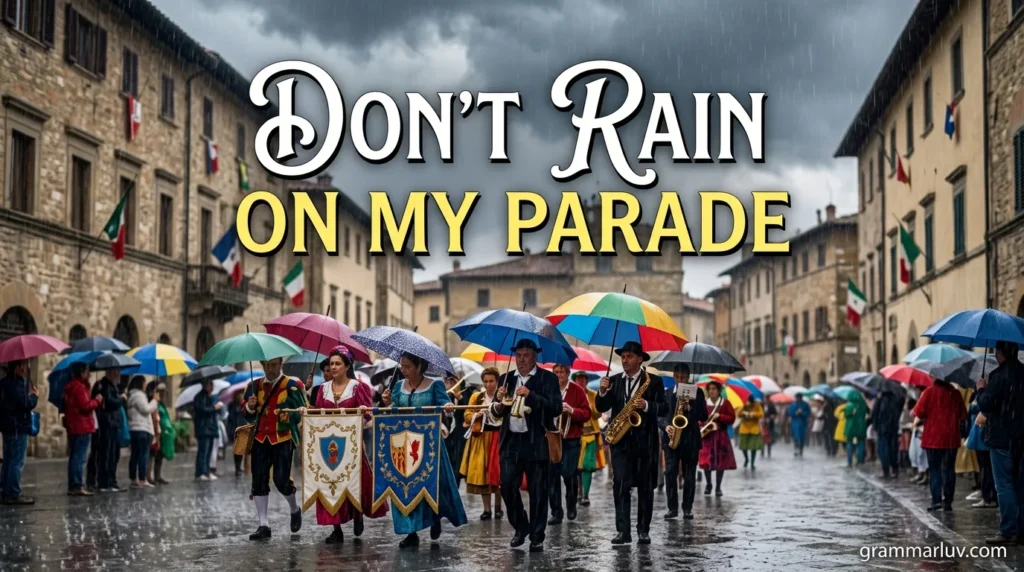
A parade is typically a joyful event involving celebration, music, costumes, and community gatherings. If it suddenly starts raining heavily, the fun may be interrupted or diminished.
Because of this visual image, the phrase evolved into a metaphor for ruining someone’s special moment.
Historical Background
The expression became widely known in American English during the twentieth century. It gained even more popularity through entertainment and music, particularly after the famous song and musical number associated with the phrase.
Today, it is recognized globally and appears frequently in movies, television shows, books, and everyday conversations.
Why Idioms Like This Matter in English
Idioms are an important part of natural communication.
Native speakers often use figurative language rather than literal descriptions. Learning common expressions helps learners understand conversations more easily and communicate with greater confidence.
Benefits of Understanding Idioms
- Improves vocabulary
- Enhances speaking fluency
- Makes writing more engaging
- Helps understand movies and TV shows
- Strengthens conversational skills
- Adds personality to communication
Mastering idiomatic expressions is an essential step toward advanced English proficiency.
Common Situations Where People Use This Phrase
This expression appears in many everyday situations.
Celebrating Success
When someone achieves a goal and another person focuses on negatives.
Example:
- “I finally bought my dream car.”
- “Cars lose value quickly.”
- “Please don’t rain on my parade.”
Sharing Good News
People often use it when announcing exciting events.
Example:
- “I’m getting married next year.”
- “Weddings are expensive.”
- “Don’t rain on my parade.”
Personal Achievements
It is common after accomplishments such as:
- Graduating from college
- Getting a promotion
- Winning a competition
- Starting a business
- Buying a home
Future Plans
People may use it when discussing ambitions and dreams.
Example:
- “I’m planning a world tour.”
- “What if everything goes wrong?”
- “Don’t rain on my parade.”
Literal vs. Figurative Meaning
Understanding the difference between literal and figurative language is essential.
TypeMeaningExampleLiteralActual rain falling on a paradeThe weather ruined the city’s celebration.FigurativeSomeone spoiling another person’s happinessHer criticism rained on his parade.
The idiom is almost always used figuratively in modern English.
This makes it a great example of metaphorical expression and creative language.
Examples in Everyday Conversations
Below are realistic examples showing how native speakers use the phrase.
Workplace Example
Employee: “I was chosen to lead the new project.”
Coworker: “That sounds stressful.”
Employee: “Don’t rain on my parade. I’m excited about it.”
School Example
Student: “I got the highest grade in the class.”
Friend: “The next exam will be harder.”
Student: “Don’t rain on my parade.”
Family Example
Child: “I made the soccer team!”
Parent: “Remember you’ll need to practice every day.”
Child: “Just let me enjoy the moment.”
Social Media Example
Someone posts vacation photos and receives a negative comment.
They might respond:
“Why are you trying to rain on my parade?”
Different Ways People Express the Same Idea
English contains many expressions with similar meanings.
Synonyms and Related Expressions
- Don’t spoil the moment
- Let me enjoy this
- Don’t ruin my excitement
- Stop being negative
- Let me celebrate
- Don’t burst my bubble
- Don’t be a killjoy
- Let me have my moment
Example Comparison
ExpressionMeaningRain on someone’s paradeRuin happiness or excitementBurst someone’s bubbleDestroy an illusion or hopeBe a killjoyReduce enjoyment for othersThrow cold water on somethingDiscourage enthusiasm
These phrases share similar emotional meanings but may be used in slightly different contexts.
The Psychology Behind Negative Reactions
Why do people sometimes dampen another person’s excitement?
There are several possible reasons.
Concern
Some people genuinely worry about potential risks and want to help.
Example:
A parent warning a child about challenges after receiving good news.
Jealousy
Occasionally, someone may feel envious of another person’s success.
This can lead to dismissive or critical comments.
Realism
Certain individuals naturally focus on practical concerns and consequences.
They may not realize that their comments are reducing someone’s enjoyment.
Habitual Negativity
Some people automatically look for problems before recognizing positive outcomes.
Understanding these motivations can help improve relationships and communication.
How to Respond When Someone Dampens Your Excitement
Not every negative comment requires confrontation.
Here are healthy ways to respond.
Acknowledge Their Perspective
You can recognize their concern without losing your enthusiasm.
Example:
“I appreciate your advice, but I’m excited about this opportunity.”
Set Boundaries
Sometimes direct communication works best.
Example:
“I know you’re trying to help, but I’d like to enjoy this moment first.”
Focus on the Positive
Redirect the conversation toward your achievement.
Example:
“Challenges may come later, but today I’m celebrating.”
Stay Confident
Do not allow unnecessary negativity to diminish your accomplishments.
Celebrating milestones is important for motivation and personal growth.
Benefits of Encouraging Rather Than Discouraging Others
Supportive communication strengthens relationships.
When people share good news, they often seek connection rather than evaluation.
Positive Responses Can:
- Build trust
- Strengthen friendships
- Increase confidence
- Encourage future success
- Improve workplace morale
- Foster emotional well-being
Examples of Encouraging Responses
Instead of:
- “That probably won’t work.”
Try:
- “Congratulations! I hope it goes well.”
Instead of:
- “You’ll face lots of problems.”
Try:
- “That’s exciting. Let me know how I can help.”
Supportive language creates stronger personal and professional relationships.
How Writers and Speakers Use This Expression
This idiom appears frequently in literature, journalism, speeches, and entertainment.
Writers often use it because it creates a vivid image that readers instantly understand.
In Creative Writing
Characters may use the phrase to reveal:
- Frustration
- Excitement
- Optimism
- Conflict
- Emotional vulnerability
In Business Communication
It can appear informally in workplace discussions.
Example:
“Let’s not rain on the team’s parade after reaching our quarterly goals.”
In Public Speaking
Speakers may use it humorously to acknowledge criticism while maintaining enthusiasm.
The phrase works well because it is memorable, visual, and emotionally relatable.
Common Mistakes to Avoid
Using It Literally When You Mean Figuratively
Remember that most uses are metaphorical.
Overusing the Expression
Like any idiom, excessive repetition can make writing sound unnatural.
Using It in Highly Formal Writing
Formal reports and academic papers generally require more direct language.
Instead of:
- “The reviewer rained on my parade.”
Use:
- “The reviewer expressed concerns regarding the proposal.”
Misunderstanding the Tone
The phrase is usually playful or conversational rather than aggressive.
Context matters.
Related Concepts in Figurative Language
This idiom connects to several language-learning concepts.
Metaphor
The image of rain disrupting a celebration symbolizes negativity affecting happiness.
Idiom
Its meaning cannot be understood solely from the individual words.
Figurative Language
The expression conveys an idea beyond its literal interpretation.
Emotional Communication
It helps speakers express disappointment when others fail to share their enthusiasm.
Learning these concepts improves reading comprehension, writing skills, and vocabulary development.
FAs
1. What does this expression mean?
It means not to spoil someone’s happiness, excitement, or celebration with negativity or criticism.
2. Is it an idiom?
Yes. It is a common English idiom with a figurative meaning.
3. Can it be used in professional settings?
Yes, but mainly in informal workplace conversations rather than formal business documents.
4. Is the phrase considered rude?
Usually no. It is often used humorously or lightly, although tone and context matter.
5. What is a synonym for this expression?
Common alternatives include “don’t burst my bubble,” “don’t spoil the moment,” and “don’t be a killjoy.”
6. Why is a parade used in the metaphor?
A parade represents celebration and joy, while rain symbolizes interruption or disappointment.
7. Can English learners use this phrase?
Absolutely. It is widely understood and commonly used in everyday English.
8. Is it more common in American English?
It is especially popular in American English but is recognized by English speakers around the world.
Conclusion
The expression don’t rain on my parade remains one of the most vivid and memorable idioms in the English language. It captures a universal human experience: wanting to enjoy moments of happiness without having that joy diminished by negativity, criticism, or doubt. Understanding its meaning, origin, usage, and related expressions can improve your vocabulary, strengthen your communication skills, and help you better understand everyday conversations.
Whether you’re celebrating a personal achievement, sharing exciting news, or encouraging others, this colorful phrase reminds us of an important social lesson: people often need support and celebration before they need criticism. By recognizing when to encourage rather than discourage, we create more positive relationships and more meaningful communication.