
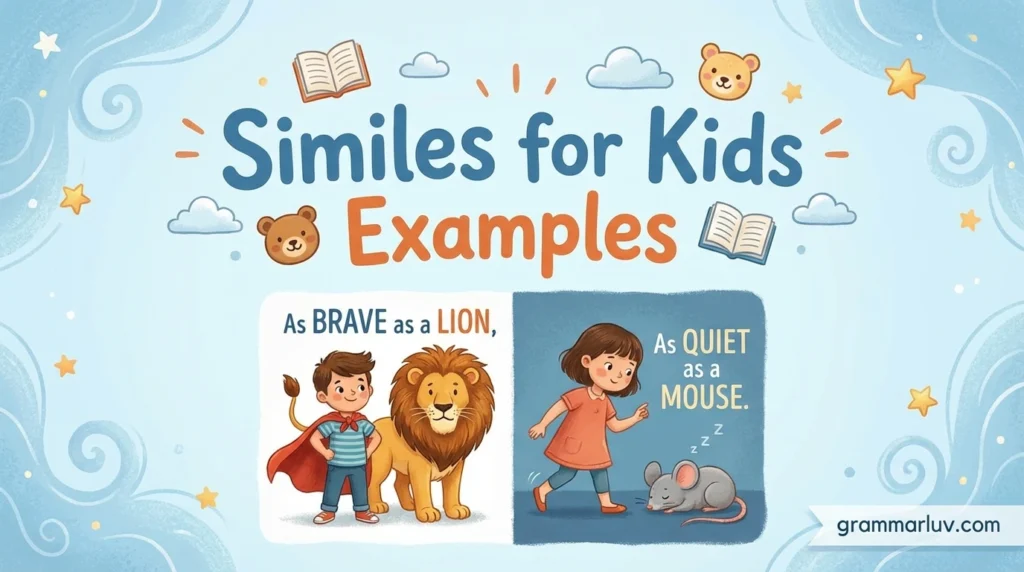
Similes are special word pictures that compare two different things using “like” or “as.” They help us describe things in creative, exciting ways that paint clear images in our minds. When we say someone is “as brave as a lion,” we’re using a simile to show just how courageous that person is.
Kids naturally love similes because they make language fun and playful. These comparisons turn ordinary sentences into colorful descriptions that stick in our memories. Whether writing stories, describing feelings, or just having fun with words, similes give children powerful tools to express themselves.
To understand the meaning and structure behind these comparisons, visit our complete post on Similes for Kids.
This guide contains 25 simple similes perfect for kids. Each example includes clear explanations and fun sentences showing how to use them. These comparisons will help young writers and speakers bring their words to life.
As Busy as a Bee
Bees never stop moving when they work. They buzz from flower to flower collecting pollen all day long. This simile describes someone who’s always doing something and rarely sits still.
Meaning: Very active and hardworking with lots to do.
When to use it: Describe someone doing many tasks or activities.
Example sentences:
My mom was as busy as a bee preparing for my birthday party.
Tommy is as busy as a bee with soccer practice, homework, and music lessons.
The teacher stayed as busy as a bee helping students all afternoon.
Quick texting example: “Can’t talk now, as busy as a bee with chores! 🐝”
As Cool as a Cucumber
Cucumbers stay cool and fresh even in hot weather. People use this simile for someone who stays calm when others might panic. It shows someone handling stress very well.
Meaning: Very calm and relaxed, not worried at all.
When to use it: Describe someone staying peaceful during stressful moments.
Example sentences:
Sarah stayed as cool as a cucumber during her piano recital.
Even when the dog ran away, Dad remained as cool as a cucumber.
My sister was as cool as a cucumber while taking her big test.
Daily conversation: “How did you stay so calm?” “I just tried to be as cool as a cucumber!”
As Light as a Feather
Feathers float gently through the air because they weigh almost nothing. This comparison describes something extremely lightweight. It creates a soft, gentle image.
Meaning: Very light in weight, barely heavy at all.
When to use it: Talk about light objects or feeling weightless.
Example sentences:
The ballerina jumped and landed as light as a feather.
This backpack feels as light as a feather without my books inside.
Snowflakes fell as light as a feather onto the ground.
As Strong as an Ox
Oxen are powerful farm animals that pull heavy loads. This simile shows incredible strength and power. It’s perfect for describing physical strength.
Meaning: Extremely strong and powerful.
When to use it: Describe someone with great physical strength.
Example sentences:
My dad is as strong as an ox when he lifts furniture.
The superhero in the story was as strong as an ox.
After months of training, Jake became as strong as an ox.
Fun fact: Kids love using this when talking about their parents or favorite heroes!
As Quiet as a Mouse
Mice move silently and make barely any sound. This simile describes someone being very silent. It’s one of the most popular comparisons kids learn.
Meaning: Completely silent, making no noise.
When to use it: Describe silent behavior or peaceful moments.
Example sentences:
The students sat as quiet as a mouse during story time.
My baby brother slept as quiet as a mouse all night.
Please be as quiet as a mouse while we walk through the library.
Classroom use: Teachers often say, “Let’s be as quiet as a mouse during the test.”
As Slow as a Snail
Snails crawl very slowly, leaving slimy trails behind them. This comparison shows something moving at a very slow pace. It’s great for describing slowness.
Meaning: Moving very slowly, taking a long time.
When to use it: Talk about slow movement or progress.
Example sentences:
The traffic moved as slow as a snail during rush hour.
I finished my homework as slow as a snail because I was tired.
The old computer loaded as slow as a snail.
As Fast as Lightning
Lightning flashes across the sky in a split second. This simile describes incredible speed. It creates excitement and energy.
Meaning: Extremely fast, quick as possible.
When to use it: Describe quick movements or actions.
Example sentences:
The cheetah ran as fast as lightning across the field.
My brother finished his dinner as fast as lightning.
The race car zoomed past as fast as lightning.
Sports talk: “She ran as fast as lightning and won the race!”
As Brave as a Lion
Lions are fearless kings of the jungle. This comparison describes great courage. It’s perfect for showing someone facing their fears.
Meaning: Very courageous and fearless.
When to use it: Describe brave actions or courageous people.
Example sentences:
Emma was as brave as a lion when she gave her speech.
The firefighter rushed into the building as brave as a lion.
You were as brave as a lion at the dentist today.
As Sweet as Honey
Honey is one of nature’s sweetest treats. This simile describes pleasant, kind behavior or sweet tastes. It shows gentleness and warmth.
Meaning: Very sweet in taste or personality.
When to use it: Describe kind people or delicious foods.
Example sentences:
Grandma’s voice sounds as sweet as honey when she sings.
The homemade cookies tasted as sweet as honey.
My best friend is as sweet as honey to everyone.
Compliment example: “Thank you for helping! You’re as sweet as honey.”
As Slippery as an Eel
Eels are smooth, wet fish that slide through your hands. This comparison describes something hard to hold or catch. It shows something escaping easily.
Meaning: Very slippery and hard to grip.
When to use it: Describe slippery objects or people who avoid things.
Example sentences:
The wet soap became as slippery as an eel in my hands.
The puppy was as slippery as an eel during bath time.
Ice on the sidewalk made it as slippery as an eel.
As Wise as an Owl
Owls represent wisdom in many stories and cultures. This simile describes someone very smart and knowledgeable. It shows respect for intelligence.
Meaning: Very wise and intelligent.
When to use it: Describe smart decisions or knowledgeable people.
Example sentences:
My grandfather is as wise as an owl about nature.
The teacher gave advice as wise as an owl.
She made a choice as wise as an owl by studying early.
Story writing: Perfect for describing elderly characters or mentors in creative writing!
As Clear as Crystal
Crystal is transparent and easy to see through. This comparison describes perfect clarity. It shows something obvious and understandable.
Meaning: Very clear and easy to understand.
When to use it: Describe clear explanations or transparent things.
Example sentences:
The teacher’s instructions were as clear as crystal.
The lake water looked as clear as crystal.
His honesty made everything as clear as crystal.
As Cold as Ice
Ice is frozen water that feels extremely cold. This simile describes freezing temperatures or unfriendly behavior. It creates a chilly image.
Meaning: Very cold in temperature or personality.
When to use it: Describe cold weather or distant behavior.
Example sentences:
My hands felt as cold as ice after playing in the snow.
The swimming pool water was as cold as ice.
The room became as cold as ice when the heater broke.
Winter descriptions: “The winter morning air was as cold as ice!”
As Happy as a Clam
Clams live safely in sand and seem content. This cheerful simile describes great happiness. It brings a smile to people’s faces.
Meaning: Very happy and content.
When to use it: Express joy and satisfaction.
Example sentences:
I was as happy as a clam on the last day of school.
She looked as happy as a clam opening her birthday presents.
The dog seemed as happy as a clam playing fetch.
As Bright as the Sun
The sun shines brilliantly in the sky. This comparison describes brilliant light or intelligence. It shows radiance and warmth.
Meaning: Very bright and shining.
When to use it: Describe bright lights, smart people, or cheerful personalities.
Example sentences:
The flashlight shone as bright as the sun.
Her smile was as bright as the sun.
That student’s ideas are as bright as the sun.
Positive reinforcement: Parents say, “Your future is as bright as the sun!”
As Soft as Cotton
Cotton balls feel fluffy and gentle to touch. This simile describes soft textures. It creates a comfortable, gentle feeling.
Meaning: Very soft and gentle.
When to use it: Describe soft materials or gentle touches.
Example sentences:
The kitten’s fur felt as soft as cotton.
The pillow was as soft as cotton.
Her voice sounded as soft as cotton.
As Tall as a Giraffe
Giraffes are the tallest land animals on Earth. This comparison describes great height. Kids love this fun animal simile.
Meaning: Very tall and high.
When to use it: Describe tall people, buildings, or trees.
Example sentences:
The basketball player stood as tall as a giraffe.
The skyscraper rose as tall as a giraffe.
The sunflower grew as tall as a giraffe.
As Hungry as a Bear
Bears eat enormous amounts of food, especially before winter. This simile describes extreme hunger. It’s playful and relatable.
Meaning: Very hungry and ready to eat.
When to use it: Express strong hunger.
Example sentences:
After swimming all day, I was as hungry as a bear.
The children came home as hungry as bears.
My stomach growls when I’m as hungry as a bear.
Dinnertime talk: “I’m as hungry as a bear! What’s for dinner?”
As Sharp as a Tack
Tacks have pointed tips that pierce easily. This comparison describes quick thinking. It shows intelligence and awareness.
Meaning: Very smart and quick-minded.
When to use it: Compliment someone’s intelligence or cleverness.
Example sentences:
My little sister is as sharp as a tack in math class.
The detective’s mind was as sharp as a tack.
She answered questions as sharp as a tack.
As White as Snow
Fresh snow is pure white and clean. This simile describes perfect whiteness. It creates pure, clean images.
Meaning: Completely white and pure.
When to use it: Describe white objects or pure things.
Example sentences:
The clouds looked as white as snow.
Her teeth were as white as snow.
The paper appeared as white as snow.
Descriptive writing: Great for describing winter scenes in stories!
As Smooth as Silk
Silk fabric feels incredibly smooth and luxurious. This comparison describes perfect smoothness. It shows elegance and quality.
Meaning: Very smooth without bumps.
When to use it: Describe smooth surfaces or graceful movements.
Example sentences:
The dance performance went as smooth as silk.
The table felt as smooth as silk after sanding.
Her hair looked as smooth as silk.
As Stubborn as a Mule
Mules refuse to move when they don’t want to. This simile describes refusing to change your mind. It shows determination.
Meaning: Very stubborn and unwilling to change.
When to use it: Describe someone who won’t budge on decisions.
Example sentences:
My brother was as stubborn as a mule about eating vegetables.
She remained as stubborn as a mule during the argument.
The toddler acted as stubborn as a mule at bedtime.
As Proud as a Peacock
Peacocks display their beautiful feathers with pride. This comparison describes showing off or feeling proud. It creates a colorful image.
Meaning: Very proud and showing off.
When to use it: Describe pride in accomplishments.
Example sentences:
He walked as proud as a peacock after winning the trophy.
She stood as proud as a peacock in her new dress.
The team felt as proud as peacocks after their victory.
Achievement moments: “You should be as proud as a peacock of that report card!”
As Round as a Ball
Balls are perfectly circular shapes. This simple simile describes round objects. Kids understand it easily.
Meaning: Completely round in shape.
When to use it: Describe circular or spherical things.
Example sentences:
The full moon looked as round as a ball.
The cookie was baked as round as a ball.
His eyes grew as round as balls in surprise.
As Old as the Hills
Hills have existed for millions of years. This exaggerated comparison describes something very old. It’s playful and humorous.
Meaning: Extremely old and ancient.
When to use it: Describe old objects, stories, or people humorously.
Example sentences:
That joke is as old as the hills.
The museum artifact was as old as the hills.
Grandpa says that song is as old as the hills.
Practical Tips for Kids Using Similes
Similes make writing and speaking more interesting. Here are quick tips for using them:
In creative writing:
- Add similes to describe characters’ appearances
- Use them for setting descriptions
- Include them in action scenes
In everyday conversation:
- Make compliments more memorable
- Explain feelings clearly
- Make stories more exciting
Common mistakes to avoid:
- Don’t mix up similes with metaphors
- Remember to use “like” or “as”
- Keep comparisons logical and clear
How Similes Help Learning
Similes boost language skills in important ways. They develop creative thinking. Kids learn to see connections between different things.
These comparisons improve vocabulary naturally. Children remember descriptive words better when attached to fun images. Writing becomes more enjoyable and expressive.
Teachers love similes because they engage students. Kids participate more in language activities. Reading comprehension improves when students understand figurative language.
Creating Your Own Similes
Making original similes is easy and fun. Start by thinking about what you want to describe. Then find something similar to compare it to.
Simple steps:
- Pick your subject
- Think of something similar
- Add “like” or “as”
- Make sure it makes sense
Practice examples: “Her laugh sounds like…” (bells, music, bubbles popping) “The sunset looked as…” (orange as a pumpkin, colorful as a painting)
Encourage kids to brainstorm lists of comparisons. The sillier, the better for practice!
Similes in Different Subjects
These comparisons aren’t just for English class. They appear everywhere in learning.
Science class: “The cell is like a tiny factory.” “Stars are as numerous as grains of sand.”
Math class: “Numbers are like building blocks.” “This problem is as easy as pie.”
History class: “The army moved as slow as molasses.” “The king was as powerful as a storm.”
Similes make every subject more relatable and memorable for young learners.
Fun Simile Games for Kids
Playing games helps children master similes naturally. Here are entertaining activities:
Simile matching: Match beginnings with endings (“As quiet as a…” → “mouse”)
Fill in the blank: Complete sentences with appropriate similes
Simile charades: Act out similes while others guess
Story chain: Each person adds a sentence with a simile to build a story
These games work great in classrooms, at home, or during car rides!
Conclusion
Similes bring language to life for kids of all ages. These simple comparisons transform plain sentences into vivid pictures that capture imagination and attention. From “as busy as a bee” to “as brave as a lion,” each simile teaches children to see connections and express themselves creatively.
Young writers and speakers who master similes gain powerful communication tools. They describe their world with color, energy, and precision. Their stories become more engaging, their explanations clearer, and their conversations more memorable.
Encourage kids to use these examples and create their own. The more they practice, the more natural figurative language becomes. Similes aren’t just educational—they’re fun, creative, and endlessly useful in every aspect of communication.
Want more practice and explanations? Head back to our full resource on Similes for Kids.
Frequently Asked Questions
What is a simile for kids?
A simile is a comparison using “like” or “as” to show how two different things are similar. It helps describe something by comparing it to something else. For example, “as fast as lightning” compares speed to lightning.
How do you teach similes to children?
Start with simple, relatable examples kids know like animals and everyday objects. Use visual aids and fun activities. Practice with games and encourage kids to create their own comparisons. Make it playful rather than technical.
What is the difference between a simile and a metaphor?
Similes use “like” or “as” to make comparisons (“She runs like the wind”). Metaphors say something IS something else without using “like” or “as” (“She is the wind when she runs”). Similes are easier for kids to spot and understand.
Why are similes important for kids to learn?
Similes develop creative thinking and vocabulary. They make writing more interesting and descriptive. Kids learn to express feelings and ideas more clearly. Understanding similes also improves reading comprehension.
Can you give 5 easy similes for kids?
Here are five simple examples: as busy as a bee, as light as a feather, as quiet as a mouse, as brave as a lion, and as sweet as honey. These are easy to remember and use in everyday situations.
What are some funny similes for kids?
Funny similes include: as happy as a clam, as cool as a cucumber, as nutty as a fruitcake, as slippery as an eel, and as stubborn as a mule. Kids love the humor in these comparisons.
How can kids practice using similes?
Kids can practice through creative writing, describing objects around them, playing simile games, completing worksheets, and reading books with figurative language. Daily practice makes similes natural and automatic in their speech and writing.