

Flowers have always inspired poets, writers, and everyday speakers to describe emotions, beauty, and life itself. One of the most effective ways to bring these delicate images to life is through similes. But what exactly is a simile, and why do we use them?
To describe flowers sparkling in daylight, pair your imagery with powerful similes for sun shining.
A simile is a figure of speech that compares two different things using words like “like” or “as.” Unlike metaphors, which state that one thing is another, similes highlight similarities while keeping both elements distinct. For example, saying “Her smile is like a blooming rose” allows readers to vividly picture the sweetness and beauty of the smile through the familiar image of a flower.
As Bright As A Sunflower
Meaning: This simile emphasizes brightness, cheerfulness, and positivity.
Tone: Cheerful, uplifting, energetic
Best Usage Context: Describing someone’s personality, morning vibes, or sunny locations
Examples:
- Her smile was as bright as a sunflower, instantly lighting up the room.
- The garden looked as bright as a sunflower under the morning sun.
- He entered the party with energy as bright as a sunflower, making everyone feel happy.
Like A Rose In Full Bloom
Meaning: Symbolizes beauty at its peak, elegance, and grace.
Tone: Romantic, elegant, poetic
Best Usage Context: Love letters, romantic descriptions, creative writing
Examples:
- She stood in the crowd like a rose in full bloom, captivating everyone.
- The artist painted the model like a rose in full bloom, capturing her delicate charm.
- His love for her grew like a rose in full bloom, blossoming beautifully over time.
As Delicate As A Petal
Meaning: Highlights fragility, tenderness, and vulnerability.
Tone: Gentle, soft, introspective
Best Usage Context: Describing sensitive emotions, delicate objects, or subtle beauty
Examples:
- Her touch was as delicate as a petal, leaving a soft trace.
- The newborn’s skin was as delicate as a petal.
- The artist’s sculpture portrayed the figure as delicate as a petal, fragile yet captivating.
Like A Lily In The Mist
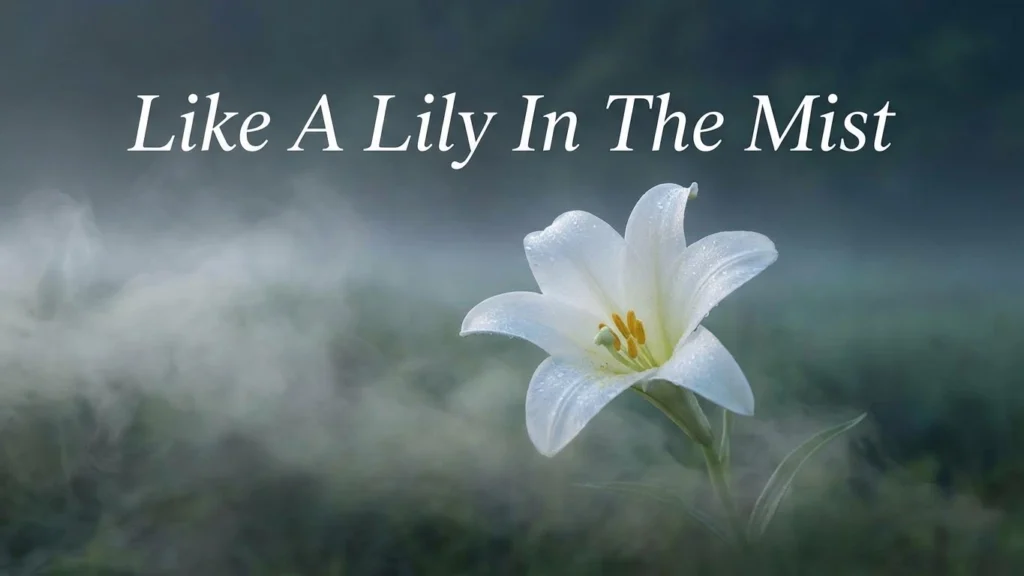
Meaning: Suggests purity, mystery, and calmness.
Tone: Serene, dreamy, mystical
Best Usage Context: Describing tranquility, ethereal beauty, or spiritual settings
Examples:
- She appeared like a lily in the mist, serene and untouchable.
- The morning fog made the garden look like a lily in the mist.
- His thoughts floated gently, like a lily in the mist, calm and unhurried.
As Vibrant As A Field Of Tulips
Meaning: Represents vivid color, liveliness, and energy.
Tone: Joyful, energetic, cheerful
Best Usage Context: Describing lively places, celebrations, or colorful personalities
Examples:
- The festival was as vibrant as a field of tulips.
- Her outfit was as vibrant as a field of tulips, attracting all eyes.
- The children’s laughter was as vibrant as a field of tulips on a sunny day.
Like A Dandelion In The Wind
Meaning: Suggests freedom, lightness, and change.
Tone: Free-spirited, whimsical, hopeful
Best Usage Context: Expressing adventure, letting go, or following dreams
Examples:
- She danced through life like a dandelion in the wind, carefree and joyful.
- The ideas spread like a dandelion in the wind, reaching far and wide.
- His thoughts drifted like a dandelion in the wind, free and unpredictable.
As Sweet As Honeysuckle
Meaning: Highlights sweetness, charm, and attractiveness.
Tone: Romantic, pleasant, endearing
Best Usage Context: Compliments, romantic writing, character description
Examples:
- Her laughter was as sweet as honeysuckle.
- The dessert tasted as sweet as honeysuckle.
- His words were as sweet as honeysuckle, warming her heart.
Like A Rose Among Thorns
Meaning: Denotes beauty or goodness in a harsh environment.
Tone: Inspirational, reflective, poetic
Best Usage Context: Highlighting resilience, uniqueness, or courage
Examples:
- She stood strong like a rose among thorns.
- The small community shone like a rose among thorns in a troubled city.
- His kindness bloomed like a rose among thorns, rare and precious.
As Fragrant As Jasmine
Meaning: Focuses on appealing aroma and subtle influence.
Tone: Sensory, soothing, romantic
Best Usage Context: Describing pleasant experiences, memories, or attractive personalities
Examples:
- Her presence was as fragrant as jasmine, calming everyone around.
- The room smelled as fragrant as jasmine after the rain.
- He gifted flowers as fragrant as jasmine, making the evening unforgettable.
Like A Poppy In The Sun
Meaning: Symbolizes boldness, courage, and attention-grabbing beauty.
Tone: Confident, lively, bright
Best Usage Context: Describing bold personalities, striking appearances, or notable actions
Examples:
- She entered the stage like a poppy in the sun.
- The red dress stood out like a poppy in the sun.
- His laughter echoed like a poppy in the sun, unmissable and bold.
As Gentle As A Camellia
Meaning: Conveys gentleness, elegance, and calm demeanor.
Tone: Soft, refined, polite
Best Usage Context: Character descriptions, serene settings, delicate interactions
Examples:
- Her voice was as gentle as a camellia.
- The nurse handled the baby as gentle as a camellia.
- He spoke as gentle as a camellia, earning everyone’s trust.
Like A Violet In The Shade
Meaning: Suggests modesty, subtle beauty, and quiet charm.
Tone: Humble, reflective, soft
Best Usage Context: Highlighting underappreciated beauty or quiet achievements
Examples:
- She worked like a violet in the shade, quietly perfecting her craft.
- His wisdom shone like a violet in the shade, unnoticed but profound.
- The shy child blossomed like a violet in the shade, gaining confidence slowly.
As Radiant As A Marigold
Meaning: Emphasizes brilliance, warmth, and cheer.
Tone: Bright, energetic, joyful
Best Usage Context: Celebratory contexts, happy descriptions, vibrant personalities
Examples:
- Her spirit was as radiant as a marigold.
- The festival decorations looked as radiant as a marigold.
- He smiled as radiant as a marigold, spreading happiness.
Like A Lotus On Water
Meaning: Symbolizes purity, calmness, and resilience in adversity.
Tone: Spiritual, serene, inspirational
Best Usage Context: Motivational writing, personal growth, mindful contexts
Examples:
- She remained calm like a lotus on water.
- His soul was like a lotus on water, untouched by chaos.
- The garden pond reflected like a lotus on water, serene and pure.
As Colorful As A Garden In Spring
Meaning: Denotes vividness, freshness, and joy.
Tone: Playful, bright, cheerful
Best Usage Context: Describing lively scenes, vibrant personalities, or creative settings
Examples:
- The party was as colorful as a garden in spring.
- Her dress was as colorful as a garden in spring, full of life.
- The artwork looked as colorful as a garden in spring, inviting admiration.
Like A Forget-Me-Not
Meaning: Represents remembrance, loyalty, and enduring affection.
Tone: Sentimental, heartfelt, nostalgic
Best Usage Context: Writing about memories, promises, or lasting relationships
Examples:
- He held onto her words like a forget-me-not.
- Their friendship bloomed like a forget-me-not.
- She kept the letter like a forget-me-not, never forgetting the moment.
As Pure As A White Orchid
Meaning: Highlights innocence, clarity, and elegance.
Tone: Calm, refined, sophisticated
Best Usage Context: Romantic, spiritual, or character description
Examples:
- Her intentions were as pure as a white orchid.
- The ballroom looked as pure as a white orchid.
- He admired her as pure as a white orchid, untouched by cynicism.
Like A Wildflower In The Meadow
Meaning: Suggests freedom, natural beauty, and uniqueness.
Tone: Free-spirited, natural, whimsical
Best Usage Context: Describing independent personalities or untamed environments
Examples:
- She thrived like a wildflower in the meadow.
- His creativity grew like a wildflower in the meadow.
- The child explored like a wildflower in the meadow, curious and free.
As Soft As A Tulip
Meaning: Emphasizes smoothness, tenderness, and approachability.
Tone: Gentle, comforting, delicate
Best Usage Context: Describing textures, feelings, or interactions
Examples:
- Her skin felt as soft as a tulip.
- The blanket was as soft as a tulip.
- He spoke as soft as a tulip, soothing her nerves.
Like A Rosebud About To Bloom
Meaning: Denotes potential, youth, and anticipation.
Tone: Hopeful, tender, delicate
Best Usage Context: Describing growth, emerging talent, or new experiences
Examples:
- The young artist was like a rosebud about to bloom.
- Her career was like a rosebud about to bloom, full of potential.
- The garden in spring was like a rosebud about to bloom, promising beauty.
As Bright As A Daisy
Meaning: Conveys cheerfulness, simplicity, and innocence.
Tone: Light, playful, happy
Best Usage Context: Describing joyful personalities or innocent charm
Examples:
- Her laughter was as bright as a daisy.
- The morning was as bright as a daisy.
- The child ran through the park as bright as a daisy, full of joy.
Like A Blossom In The Rain
Meaning: Suggests resilience, grace under pressure, and subtle beauty.
Tone: Inspirational, poetic, serene
Best Usage Context: Describing personal growth, overcoming adversity, or natural beauty
Examples:
- She faced challenges like a blossom in the rain.
- His patience bloomed like a blossom in the rain.
- The flowers looked like a blossom in the rain, delicate yet enduring.
As Rare As A Blue Rose
Meaning: Denotes uniqueness, mystery, and extraordinary beauty.
Tone: Mysterious, sophisticated, exclusive
Best Usage Context: Highlighting rare qualities, exceptional events, or unique gifts
Examples:
- Her talent was as rare as a blue rose.
- The moment was as rare as a blue rose.
- He found a solution as rare as a blue rose, unexpected yet brilliant.
Like A Sun-Kissed Marigold
Meaning: Suggests warmth, energy, and optimism.
Tone: Bright, lively, cheerful
Best Usage Context: Describing sunny moods, cheerful personalities, or warm environments
Examples:
- She greeted everyone like a sun-kissed marigold.
- The morning garden looked like a sun-kissed marigold.
- His energy was like a sun-kissed marigold, uplifting everyone.
As Lovely As A Camellia In Bloom
Meaning: Highlights attractiveness, charm, and refined beauty.
Tone: Romantic, elegant, poetic
Best Usage Context: Compliments, romantic writing, or descriptive prose
Examples:
- Her presence was as lovely as a camellia in bloom.
- The ballroom looked as lovely as a camellia in bloom.
- The painting captured her as lovely as a camellia in bloom.
Like A Flower Opening At Dawn
Meaning: Represents new beginnings, hope, and gentle awakening.
Tone: Hopeful, serene, poetic
Best Usage Context: Morning descriptions, motivational writing, or life transitions
Examples:
- Her eyes opened like a flower at dawn, curious and bright.
- The city slowly came alive like a flower opening at dawn.
- His ideas blossomed like a flower opening at dawn, fresh and inspiring.
As Enchanting As Night-Blooming Jasmine
Meaning: Denotes charm, mystery, and allure.
Tone: Romantic, mystical, captivating
Best Usage Context: Evening descriptions, romantic contexts, or enchanting scenes
Examples:
- Her smile was as enchanting as night-blooming jasmine.
- The garden smelled as enchanting as night-blooming jasmine.
- The story unfolded as enchanting as night-blooming jasmine, full of wonder.
Texting Examples With Flower Similes
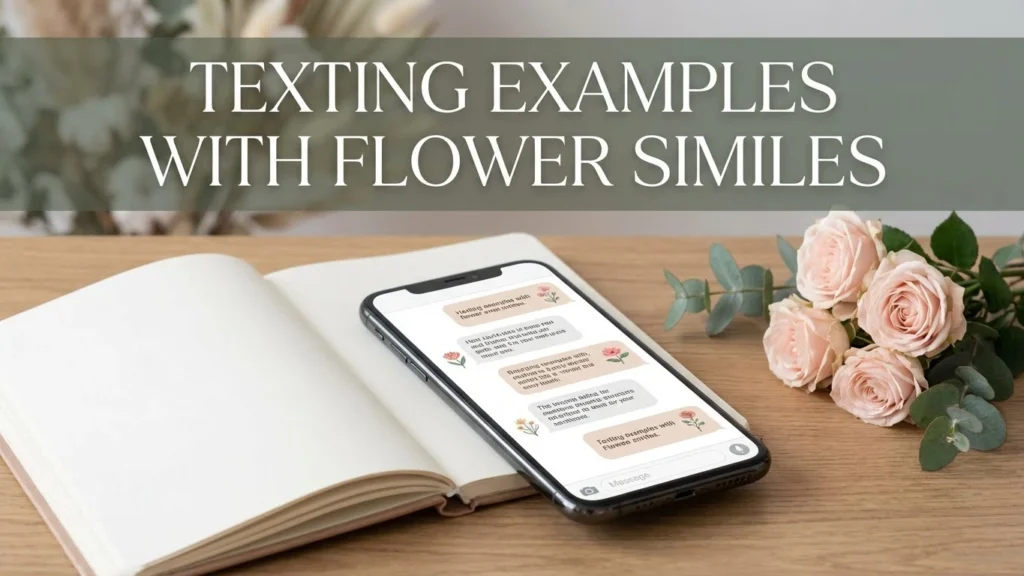
- “Good morning! Hope your day is as bright as a sunflower 🌻”
- “You’re as sweet as honeysuckle 😘”
- “Feeling like a dandelion in the wind today—free and happy 🌼”
- “Miss you! You’re like a rose among thorns in my life ❤️”
- “That dress makes you look as lovely as a camellia in bloom 🌸”
Daily-Use Sentences With Flower Similes
- “The baby slept as gentle as a camellia.”
- “The festival decorations were as vibrant as a field of tulips.”
- “She entered the room like a poppy in the sun, full of confidence.”
- “His kindness was like a forget-me-not, always remembered.”
- “The morning felt like a flower opening at dawn, fresh and hopeful.”
Flowers often glow under bright skies, so adding creative similes for sun shining can enhance your descriptions.
Conclusion
Similes for flowers are more than just poetic devices—they breathe life into words, making descriptions vivid, emotional, and memorable. From the radiant brightness of a sunflower to the delicate grace of a petal, each simile can transform ordinary writing into something extraordinary. Whether you’re writing a poem, sending a cheerful text, or crafting a story, flower similes help convey beauty, emotion, and imagery in a way that resonates with readers. Embrace these comparisons and watch your writing bloom like the most vibrant garden.
FAQs
Q1: What is the difference between a simile and a metaphor?
A simile compares two different things using words like “as” or “like,” while a metaphor directly states one thing is another. Similes keep the comparison explicit.
Q2: Why are flowers commonly used in similes?
Flowers symbolize beauty, growth, fragility, and emotions. Their diversity and vivid imagery make them perfect for figurative language.
Q3: Can flower similes be used in professional writing?
Yes, as long as they fit the tone. For example, describing freshness or growth in marketing, presentations, or motivational content.
Q4: How can I make my flower similes more creative?
Combine sensory details like color, fragrance, and movement. For example, “As soft as a tulip brushed by morning dew.”
Q5: Are flower similes suitable for texting?
Absolutely! They make messages warm, personal, and vivid. Short, cheerful similes work best.
Q6: Can I create my own flower similes?
Yes, observe nature and emotions. Match a flower’s characteristic with the quality you want to describe.
Q7: How do flower similes enhance writing?
They add vivid imagery, evoke emotions, and make descriptions more engaging and relatable, enhancing reader experience.