
Strong writing is more than putting words together correctly. It involves choosing the right words to create clear meaning, vivid imagery, and effective communication. Figurative language, descriptive language, literary devices, similes, and metaphors help writers express ideas creatively while making their content memorable and engaging.
However, even skilled writers can confuse words that sound alike but have different meanings. These words, known as homophones, often create challenges for students, English learners, and professional writers. One common example is creek vs creak. Although they sound identical, they refer to completely different things.
Understanding the distinction between these two words can improve vocabulary enhancement, writing skills, reading comprehension, and overall language accuracy. This guide explores their meanings, uses, examples, common mistakes, exercises, and practical tips to help you use them confidently in both academic and creative writing.
What Are Homophones?
Homophones are words that share the same pronunciation but differ in spelling and meaning.
Examples include:
Word 1Word 2TheirThereRightWriteFlourFlowerCreekCreak
Because homophones sound alike, writers sometimes select the wrong word, especially when writing quickly or relying on spellcheck.
Learning the meanings and contexts of each word helps prevent confusion and improves communication.
What Does Creek Mean?
A creek is a small stream or narrow waterway. It usually contains flowing water and is often smaller than a river.
Definition
A creek is:
- A small natural stream
- A narrow water channel
- A branch of a river
- A geographical water feature
Characteristics of a Creek
- Contains flowing water
- Found in rural and natural environments
- Supports plants and wildlife
- Often used in geography and environmental studies
Examples of Creek in Sentences
- The children played beside the creek all afternoon.
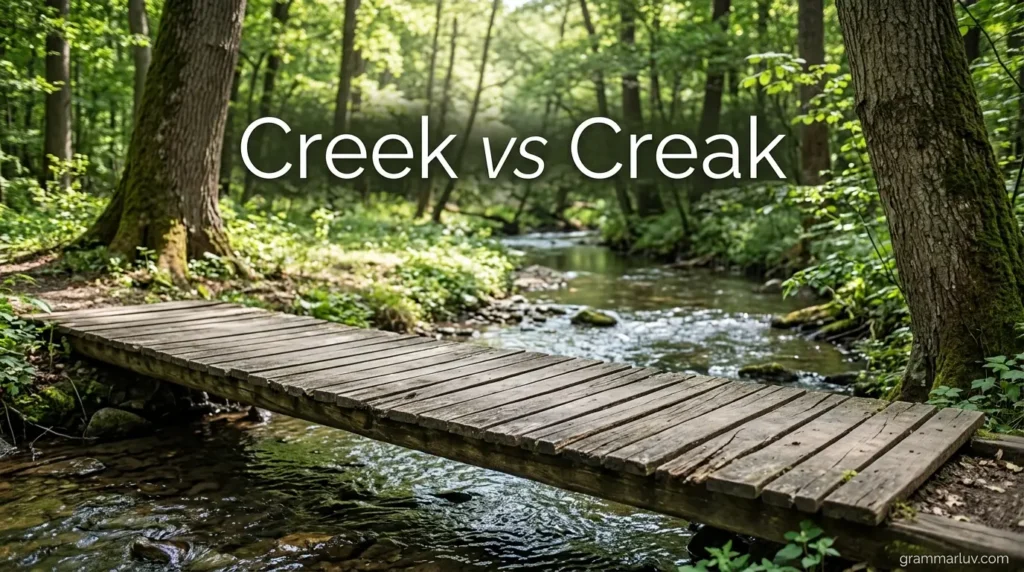
- A wooden bridge crossed the narrow creek.
- Fish swam through the clear creek behind the cabin.
- We followed the creek during our hike.
- The creek overflowed after heavy rainfall.
These examples show that creek always relates to water and natural landscapes.
What Does Creak Mean?
A creak is a squeaking, groaning, or cracking sound. It can be used as both a noun and a verb.
Definition as a Noun
A creak is a sharp or squeaky noise.
Example:
- We heard a creak coming from the attic.
Definition as a Verb
To creak means to make a squeaking or groaning sound.
Example:
- The old floorboards creaked under our feet.
Common Sources of Creaking Sounds
- Wooden floors
- Doors
- Stairs
- Furniture
- Trees swaying in the wind
- Old ships
Examples of Creak in Sentences
- The door made a loud creak.
- The rocking chair began to creak.
- We heard the house creak during the storm.
- The staircase creaked with every step.
- His old bicycle creaked as he rode away.
Unlike creek, creak is related to sounds rather than water.
Quick Comparison Table
FeatureCreekCreakPart of SpeechNounNoun and VerbMeaningSmall stream of waterSqueaking or groaning soundRelated ToNature, rivers, geographySounds, movement, old objectsExampleThe creek flows through the forest.The door creaked open.CategoryPhysical locationSound or action
This comparison helps distinguish the two words instantly.
Creek in Creative Writing and Descriptive Language
Writers frequently use creek to create vivid natural settings.
Descriptive Examples
- A crystal-clear creek wound through the valley.
- The gentle creek reflected the morning sunlight.
- Wildflowers lined the banks of the peaceful creek.
Sensory Writing Example
“The creek sparkled like liquid silver beneath the afternoon sun.”
This sentence uses imagery to help readers visualize the scene.
Why Writers Use Creek
A creek can symbolize:
- Peace
- Nature
- Growth
- Journey
- Renewal
Because of these associations, it appears often in stories, poems, and travel writing.
Creak in Creative Writing and Storytelling
The word creak is often used to create mood and atmosphere.
Examples
- A mysterious creak echoed through the empty hallway.
- The cabin door let out a slow creak in the darkness.
- Every creak of the floor heightened the suspense.
Emotional Effects
A creak may suggest:
- Mystery
- Fear
- Tension
- Age
- Loneliness
Horror and suspense writers frequently use creaking sounds to build anticipation and dramatic effect.
Descriptive Writing Example
“The staircase released a long, eerie creak as she climbed toward the attic.”
This sentence helps readers hear the sound and imagine the scene.
Figurative Language Using Creek and Creak
Both words can appear in figurative language and poetic expression.
Metaphor Examples
Creek Metaphor
“Her thoughts were a winding creek, flowing in unexpected directions.”
Meaning: Her thoughts moved naturally and unpredictably.
Creak Metaphor
“His confidence creaked under pressure.”
Meaning: His confidence weakened when challenged.
Simile Examples
Creek Similes
- The creek flowed like a ribbon through the meadow.
- Her voice was as gentle as a mountain creek.
Creak Similes
- The chair creaked like an old ship at sea.
- The door sounded like a tired giant waking up.
These literary devices make writing more vivid and engaging.
When to Use Creek
Use creek whenever referring to:
1. Natural Waterways
- The creek runs behind our house.
2. Outdoor Locations
- Campers gathered near the creek.
3. Geography Discussions
- The map shows several creeks in the region.
4. Environmental Writing
- Pollution affected the local creek ecosystem.
Correct Contexts
✔ Water ✔ Nature ✔ Geography ✔ Landscapes
When to Use Creak
Use creak when discussing:
1. Sounds
- We heard a creak upstairs.
2. Aging Objects
- The old gate creaked loudly.
3. Movement
- The floorboards creaked beneath us.
4. Sound Effects in Writing
- A sudden creak interrupted the silence.
Correct Contexts
✔ Noise ✔ Sound ✔ Movement ✔ Aging materials
Common Mistakes and How to Avoid Them
Many learners confuse these words because they sound identical.
Mistake 1
❌ We crossed the creak during our hike.
✔ We crossed the creek during our hike.
Reason: Crossing water requires creek.
Mistake 2
❌ The door creeked open slowly.
✔ The door creaked open slowly.
Reason: Doors make sounds, so use creaked.
Mistake 3
❌ Fish were swimming in the creak.
✔ Fish were swimming in the creek.
Reason: Fish swim in water, not sounds.
Easy Memory Tricks
Remember Creek
Contains “ee” like stream.
Think:
“Creek = water.”
Remember Creak
Contains “ea” like hear.
Think:
“Creak = something you hear.”
These memory devices help learners remember the correct spelling.
Sentence Examples for Practice
Creek Sentences
- Ducks gathered near the creek.
- The creek widened after the storm.
- We skipped stones across the creek.
- Trees shaded the creek bank.
- The creek supplied water to local wildlife.
Creak Sentences
- The floorboards creaked loudly.
- I heard a creak from the hallway.
- The swing creaked in the wind.
- Old furniture often creaks.
- The cabin door creaked open.
Mixed Comparison Examples
- We camped beside the creek and heard the cabin creak at night.
- The creek flowed quietly while the bridge creaked overhead.
- Birds sang near the creek as the wooden dock creaked beneath us.
These comparison examples help reinforce proper usage.
Tone and Style Considerations
Word choice influences tone.
Creek Creates
- Calmness
- Beauty
- Serenity
- Natural imagery
Example:
“The creek sparkled beneath the sunset.”
Tone: Peaceful and relaxing.
Creak Creates
- Suspense
- Unease
- Tension
- Realism
Example:
“A creak shattered the silence.”
Tone: Dramatic and suspenseful.
Writers choose these words strategically depending on the mood they want to create.
Vocabulary Enhancement Through Context
Expanding vocabulary involves understanding words within context rather than memorizing definitions alone.
Related Words for Creek
- Stream
- Brook
- Waterway
- Tributary
- Channel
Related Words for Creak
- Squeak
- Groan
- Crack
- Scrape
- Rustle
Learning related words improves reading comprehension and writing versatility.
Practice Exercises
Exercise 1: Fill in the Blank
Choose creek or creak.
- We followed the ______ through the forest.
- The old stairs began to ______.
- Fish lived in the shallow ______.
- A loud ______ came from the attic.
- The wooden gate started to ______.
Answers
- creek
- creak
- creek
- creak
- creak
Exercise 2: Identify the Correct Word
- The creek/creak behind the house freezes every winter.
- I heard a creek/creak outside my bedroom.
- The bridge crossed a small creek/creak.
- The rocking chair creeked/creaked loudly.
- The creek/creak flows into the river.
Answers
- creek
- creak
- creek
- creaked
- creek
Exercise 3: Write Your Own Sentences
Create:
- Two sentences using creek.
- Two sentences using creak.
- One descriptive paragraph using both words correctly.
This exercise strengthens writing skills and word retention.
Why Understanding Homophones Improves Writing
Correct word choice contributes to:
- Professional communication
- Academic success
- Better reading comprehension
- Stronger creative writing
- Improved vocabulary
- Greater confidence in English
Even a small spelling mistake can change the meaning of an entire sentence. Mastering homophones helps writers communicate clearly and accurately.
FAQs
1. Are creek and creak pronounced the same?
Yes. They are homophones and share the same pronunciation, but they have different spellings and meanings.
2. Is creek a noun or a verb?
Creek is generally used as a noun referring to a small stream of water.
3. Can creak be both a noun and a verb?
Yes. It can refer to a sound (noun) or the action of making that sound (verb).
4. How can I remember the difference?
Think of creek as water and creak as a sound. The memory trick “hear a creak” can help.
5. Which word is more common in creative writing?
Both appear frequently. Creek is common in nature writing, while creak is common in suspense, mystery, and horror writing.
Conclusion
Although creek and creak sound exactly alike, they serve very different purposes in English. A creek is a small flowing waterway found in nature, while a creak is a squeaking or groaning sound often produced by movement or aging objects. Understanding this distinction helps students, writers, and English learners avoid common spelling mistakes and communicate more effectively.
By studying definitions, sentence examples, figurative language, literary devices, simile examples, metaphor examples, and contextual usage, you can confidently choose the correct word every time. Whether you are crafting descriptive language for a story, improving academic writing, or enhancing your vocabulary, mastering these homophones will strengthen your overall communication skills and make your writing clearer, richer, and more professional.