
Introduction: Why Figurative Language Makes Writing More Powerful
Strong communication is about more than simply choosing the correct words. Effective writers use descriptive language, figurative language, literary devices, and creative expression to make their ideas memorable and engaging. Whether you’re writing a school essay, a blog post, a poem, or a story, the words you choose influence how readers feel and understand your message.
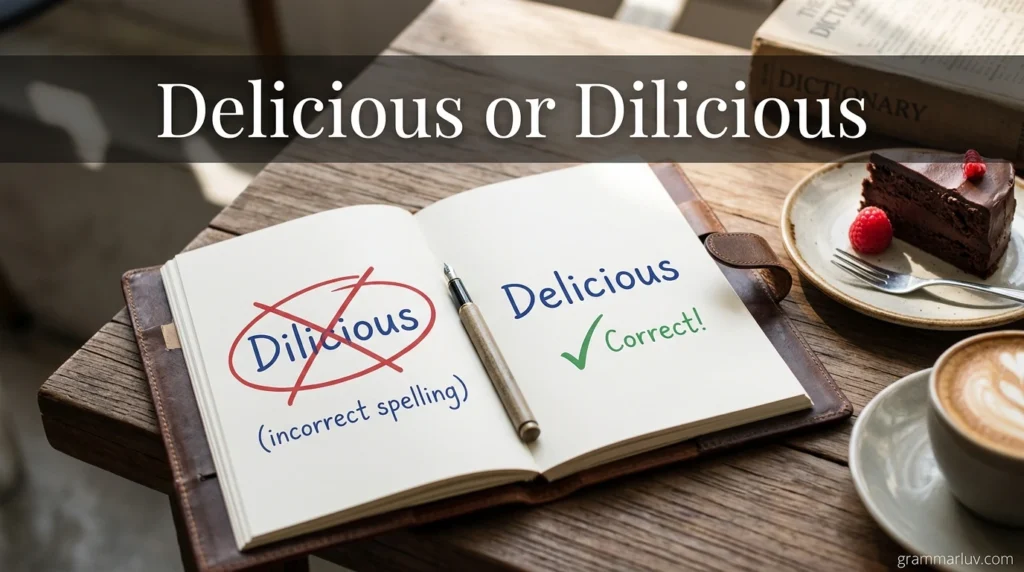
One common spelling question that confuses English learners is whether the correct word is delicious or dilicious. Because English pronunciation sometimes differs from spelling, many people mistakenly write “dilicious” when they actually mean “delicious.”
Understanding the correct spelling not only improves writing skills but also enhances vocabulary development, professional communication, and overall language accuracy. This guide explains the meaning, usage, examples, common mistakes, figurative applications, and practical exercises to help you master this frequently confused word.
What Does Delicious Mean?
Delicious is an adjective used to describe food or drink that tastes very pleasant, enjoyable, or satisfying.
Definition
Delicious (adjective): Something that has an excellent taste or flavor.
Pronunciation
Delicious /dɪˈlɪʃəs/
Because the first syllable sounds similar to “di,” many learners mistakenly spell it as “dilicious.”
Correct and Incorrect Forms
FormCorrect?ExplanationDelicious✓ YesStandard English spellingDilicious✗ NoMisspellingDelisious✗ NoIncorrect spellingDelicious✗ NoIncorrect spelling
The correct spelling is always delicious.
Why People Write “Dilicious” Instead of “Delicious”
Spelling mistakes often happen because English pronunciation does not always clearly indicate spelling.
Common Reasons
1. Sound-Based Spelling
People hear:
“di-lish-us”
and incorrectly write:
“dilicious”
instead of:
“delicious.”
2. Fast Speech
Native speakers often pronounce words quickly, making spelling harder to identify.
3. Limited Vocabulary Exposure
Learners who hear the word more often than they read it may develop incorrect spelling habits.
4. Autocorrect Dependence
Relying entirely on autocorrect can prevent learners from memorizing proper spellings.
Meaning and Usage of Delicious
The word primarily describes food and beverages, but it can also be used figuratively.
Literal Meaning
Used for enjoyable tastes.
Examples
- The pizza was delicious.
- We enjoyed a delicious breakfast.
- Her homemade cookies are always delicious.
- The soup tasted delicious on a cold evening.
- This mango is incredibly delicious.
Figurative Meaning
Sometimes writers use “delicious” creatively to describe experiences, moments, or ideas.
Examples
- The victory felt delicious after months of hard work.
- She enjoyed the delicious irony of the situation.
- The novel contains a delicious mystery.
In these cases, the word expresses pleasure rather than taste.
Delicious in Descriptive Language
Descriptive language helps readers visualize and experience what is being described.
Instead of writing:
The cake was good.
You can write:
The cake was delicious, moist, and rich with chocolate flavor.
Better Descriptive Examples
Basic SentenceEnhanced SentenceThe meal was good.The meal was delicious and perfectly seasoned.The fruit tasted nice.The fruit was deliciously sweet and juicy.The dessert was enjoyable.The dessert was delicious, creamy, and satisfying.
Using precise adjectives strengthens writing quality.
Delicious in Figurative Language
Figurative language adds creativity and emotional impact to writing.
Simile Examples
A simile compares two things using “like” or “as.”
Examples
- The pie was as delicious as a chef’s signature dish.
- The strawberries tasted like delicious drops of summer.
- The soup was as delicious as a family recipe passed through generations.
Metaphor Examples
A metaphor directly compares two things.
Examples
- The cake was a delicious cloud of sweetness.
- Her cooking was a delicious masterpiece.
- The meal became a delicious celebration of culture.
Personification Examples
Personification gives human qualities to non-human things.
Examples
- The delicious aroma welcomed us into the kitchen.
- The soup invited everyone to the table.
- The freshly baked bread smiled through its golden crust.
Delicious in Creative Writing and Poetry
Writers often use sensory vocabulary to create vivid imagery.
Creative Writing Example
The delicious smell of cinnamon drifted through the house, wrapping every room in warmth and comfort. Fresh cookies rested on the tray, their golden edges promising sweetness in every bite.
Poetic Expression Example
The delicious scent of morning bread,
Through silent halls it softly spread.
A simple taste, a joyful treasure,
Turning ordinary moments into pleasure.
Such language improves reader engagement and emotional connection.
Common Idioms and Expressions Related to Food
While “delicious” itself is not an idiom, it frequently appears alongside food-related expressions.
Popular Idioms
IdiomMeaningPiece of cakeVery easyBring home the baconEarn moneyFull of beansEnergeticSpill the beansReveal a secretSweeten the dealMake an offer more attractive
Example Sentences
- The exam was a piece of cake.
- She spilled the beans about the surprise party.
- The bonus helped sweeten the deal.
Understanding idiom meaning improves language fluency.
Tone and Context: When to Use Delicious
The word works well in many communication styles.
Formal Writing
Suitable for:
- Restaurant reviews
- Food articles
- Product descriptions
- Travel writing
Example
The restaurant served a delicious selection of traditional dishes.
Informal Writing
Suitable for:
- Social media posts
- Text messages
- Conversations
Example
That burger was absolutely delicious!
Creative Writing
Excellent for:
- Stories
- Poems
- Descriptive essays
Example
The delicious scent of fresh coffee filled the cabin.
When to Avoid Using Delicious
Although useful, repetition can weaken writing.
Avoid Excessive Repetition
Poor Example:
- The cake was delicious.
- The cookies were delicious.
- The pie was delicious.
Better Example:
- The cake was delectable.
- The cookies were mouthwatering.
- The pie was scrumptious.
Avoid Vague Descriptions
Instead of:
The meal was delicious.
Try:
The meal featured rich spices, tender meat, and a perfectly balanced flavor.
Specific details create stronger imagery.
Synonyms and Vocabulary Enhancement
Expanding vocabulary improves writing quality.
Common Synonyms
WordMeaningTastyPleasant flavorFlavorfulRich in tasteDelectableExtremely pleasingMouthwateringAppealing and temptingScrumptiousVery deliciousSavoryRich and satisfyingAppetizingStimulating appetiteLusciousRich and enjoyableDelightfulGiving pleasureExquisiteExceptionally fine
Sentence Examples
- The soup was delectable.
- The pastries looked mouthwatering.
- The chef prepared an exquisite meal.
- The sandwich was surprisingly flavorful.
Vocabulary enhancement makes writing more sophisticated.
Common Mistakes English Learners Make
Mistake 1: Incorrect Spelling
❌ Dilicious
✅ Delicious
Mistake 2: Capitalization Errors
❌ delicious is my Favorite dessert.
✅ Delicious desserts are my favorite.
Mistake 3: Overusing the Word
❌ Everything was delicious.
✅ The steak was savory, the salad fresh, and the dessert delectable.
Mistake 4: Using It for Non-Pleasant Situations
❌ The traffic jam was delicious.
✅ The traffic jam was frustrating.
Use the word only when expressing enjoyment or pleasure.
Comparison Examples: Delicious vs Similar Words
Quick Comparison Table
WordPrimary UseDeliciousExcellent tasteTastyPleasant flavorFlavorfulRich tasteAppetizingMakes you want to eatDelectableExceptionally deliciousScrumptiousInformal praise for food
Example Comparison
- The soup was tasty.
- The soup was flavorful.
- The soup was delicious.
- The soup was delectable.
Each version increases the intensity of praise.
Practice Exercises for Students and English Learners
Exercise 1: Choose the Correct Spelling
- The cake was ______.
- a) Dilicious
- b) Delicious
- We enjoyed a ______ lunch.
- a) Delicious
- b) Dilicious
Answers
- b) Delicious
- a) Delicious
Exercise 2: Fill in the Blank
- The chef prepared a __________ meal.
- The cookies tasted __________.
- The soup smelled __________.
Possible Answers
- delicious
- delectable
- scrumptious
- mouthwatering
Exercise 3: Rewrite with Better Vocabulary
Original:
The food was delicious.
Improved:
The food was flavorful, aromatic, and perfectly seasoned.
Exercise 4: Create Similes
Example:
The pie was as delicious as ________.
Possible completion:
The pie was as delicious as a homemade holiday feast.
Tips for Remembering the Correct Spelling
Memory Trick 1
Think:
DE + LICIOUS
The word begins with “de”, not “di.”
Memory Trick 2
Associate it with:
- Delight
- Delightful
- Delicious
All begin with similar letter patterns.
Memory Trick 3
Read restaurant menus, recipes, and food articles regularly to reinforce correct spelling.
FAQs
1. Is “dilicious” a real English word?
No. “Dilicious” is a spelling mistake. The correct word is “delicious.”
2. Why do people spell delicious incorrectly?
The pronunciation can make learners think the word begins with “di” instead of “de.”
3. Can delicious be used figuratively?
Yes. Writers often use it to describe enjoyable experiences, irony, victories, or emotions.
4. What part of speech is delicious?
It is an adjective used to describe something highly enjoyable, especially food and drink.
5. What are some stronger alternatives to delicious?
Good alternatives include delectable, scrumptious, mouthwatering, luscious, flavorful, and exquisite.
Conclusion
Mastering the correct spelling of delicious is important for clear, professional, and confident communication. While “dilicious” may seem logical based on pronunciation, it is always considered incorrect in standard English. Beyond spelling, understanding how to use this adjective in descriptive language, figurative language, creative writing, literary devices, simile examples, metaphor examples, and everyday communication can significantly improve writing skills.
For students, writers, and English learners, building strong vocabulary and paying attention to spelling accuracy are essential steps toward effective communication. By practicing the examples, exercises, and comparison tables in this guide, you’ll not only remember the correct spelling but also enhance your descriptive writing and overall language proficiency.