

The term deadbeat is commonly used to describe a person who consistently avoids responsibilities, especially financial obligations. While the word often appears in conversations about unpaid debts or child support, its meaning extends to various situations where someone fails to fulfill expected duties despite having the ability to do so.
Understanding this concept is important because it appears frequently in legal discussions, personal finance, family matters, workplace conversations, and everyday language. This article explores the definition, types, examples, causes, consequences, and related concepts to provide a complete understanding of the term.
What Does Deadbeat Mean?
A deadbeat is a person who repeatedly avoids paying debts, meeting obligations, or fulfilling responsibilities. The term is generally negative and implies that the individual chooses not to honor commitments rather than being unable to do so due to circumstances beyond their control.
Common characteristics include:
- Avoiding financial responsibilities
- Ignoring repayment agreements
- Neglecting family obligations
- Depending excessively on others
- Refusing accountability
The word is often associated with irresponsible behavior and lack of reliability.
Origin and History of the Term

The term emerged in American English during the late nineteenth century. Initially, it referred to people who failed to pay debts or attempted to evade creditors.
Over time, its usage expanded beyond financial matters. Today, it can describe anyone who consistently avoids responsibilities in personal, social, or professional settings.
The term remains widely used in:
- Financial discussions
- Legal proceedings
- Family law cases
- Popular culture
- Everyday conversations
Different Types of Deadbeats
Not all situations involve the same kind of irresponsible behavior. The term can apply to several categories.
Type 1: Financial Deadbeat
This individual avoids repaying loans, borrowed money, rent, or other financial obligations.
Examples:
- Refusing to repay friends after borrowing money
- Ignoring credit card balances
- Avoiding rent payments
Type 2: Child Support Deadbeat
A parent who deliberately avoids court-ordered child support payments.
Examples:
- Missing required support payments
- Hiding income to reduce obligations
- Ignoring legal notices
Type 3: Relationship Deadbeat
Someone who contributes little to a relationship while expecting continuous support from others.
Examples:
- Never sharing responsibilities
- Relying entirely on a partner financially
- Avoiding commitments
Type 4: Workplace Deadbeat
An employee who consistently avoids duties while expecting compensation and benefits.
Examples:
- Repeatedly failing to complete assignments
- Shifting responsibilities to coworkers
- Avoiding accountability
Common Situations Where the Term Is Used
The word appears in many real-life contexts.
SituationTypical MeaningPersonal financeSomeone who avoids paying debtsFamily lawParent failing to provide supportHousingTenant avoiding rent paymentsEmploymentWorker neglecting responsibilitiesSocial relationshipsIndividual relying excessively on others
Context often determines the specific meaning.
Signs of Irresponsible Behavior
Certain patterns frequently characterize people described with this term.
Financial Warning Signs
- Repeatedly missing payments
- Ignoring debt collectors
- Making excuses for unpaid obligations
- Borrowing without repayment plans
Personal Warning Signs
- Avoiding commitments
- Refusing accountability
- Depending on others excessively
- Breaking promises repeatedly
Professional Warning Signs
- Missing deadlines regularly
- Poor reliability
- Lack of responsibility
- Minimal contribution to team efforts
These behaviors often create trust issues and damaged relationships.
Why Do Some People Become Deadbeats?
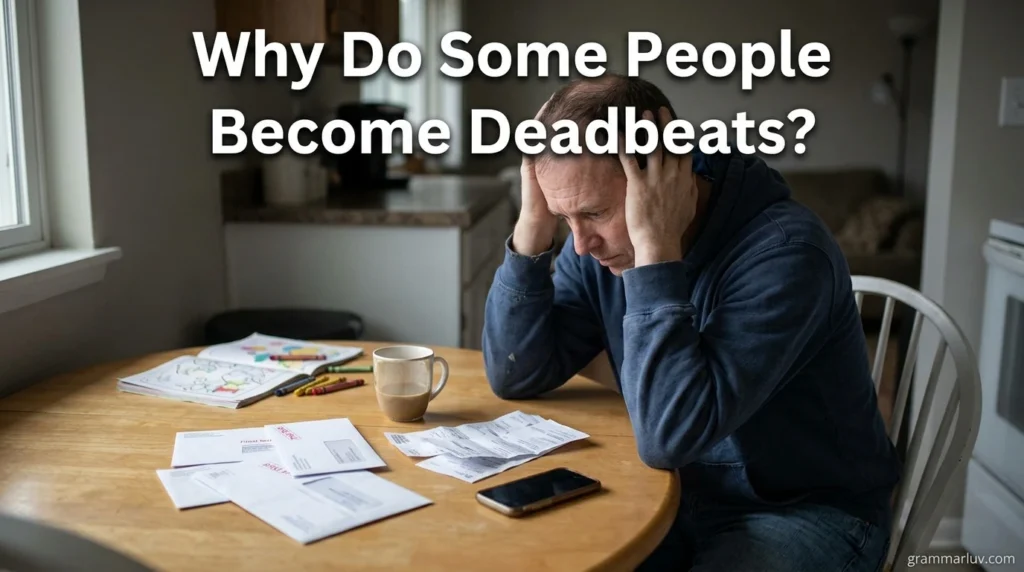
The reasons vary from person to person.
Poor Financial Management
Many individuals struggle because they lack budgeting and money-management skills.
Lack of Responsibility
Some simply choose to avoid obligations even when capable of fulfilling them.
Personal Problems
Issues such as addiction, poor decision-making, or unstable lifestyles can contribute.
Negative Habits
Repeated avoidance can become a long-term behavioral pattern.
Entitlement Mentality
Some individuals expect support from others without contributing themselves.
Understanding the cause can help distinguish between intentional neglect and genuine hardship.
Consequences of Avoiding Responsibilities
Failing to meet obligations often leads to serious consequences.
Financial Consequences
- Damaged credit scores
- Collection actions
- Increased debt
- Legal penalties
Legal Consequences
In certain situations, especially involving child support, courts may impose penalties such as:
- Wage garnishment
- Asset seizure
- Fines
- License suspension
Personal Consequences
- Loss of trust
- Damaged relationships
- Social isolation
- Reduced opportunities
The long-term impact can be significant.
Real-Life Examples
Example 1: Unpaid Loan
A person borrows money from a friend with a promise to repay within six months. Years pass without repayment despite having sufficient income.
Example 2: Child Support Avoidance
A parent repeatedly ignores court-ordered support payments while continuing to earn income.
Example 3: Shared Living Expenses
A roommate consistently avoids paying utility bills and rent while expecting others to cover the costs.
Example 4: Workplace Neglect
An employee regularly avoids tasks, forcing coworkers to complete additional work.
These examples illustrate why the term often carries a negative reputation.
How to Protect Yourself Financially
Avoiding problems starts with preventative measures.
When Lending Money
- Create written agreements
- Establish repayment schedules
- Keep records of transactions
- Set clear expectations
In Business Relationships
- Use contracts
- Verify financial history
- Document obligations
- Monitor payments
In Personal Relationships
- Discuss financial expectations early
- Maintain clear boundaries
- Address concerns promptly
Preventive steps reduce the likelihood of disputes.
Difference Between Financial Hardship and Being a Deadbeat
An important distinction exists between someone experiencing genuine hardship and someone intentionally avoiding responsibilities.
Genuine HardshipIntentional AvoidanceWants to pay but cannotCan pay but chooses not toCommunicates openlyAvoids communicationAttempts solutionsIgnores obligationsSeeks assistanceMakes excuses repeatedlyDemonstrates effortShows little accountability
This distinction is crucial because circumstances vary significantly.
Related Terms and Similar Concepts
Several words have similar meanings depending on the context.
Debtor
Someone who owes money, though not necessarily irresponsibly.
Freeloader
A person who benefits from others without contributing.
Delinquent Payer
Someone who misses required payments.
Defaulter
An individual who fails to meet contractual obligations.
Irresponsible Person
A broader term describing someone who neglects duties and commitments.
While related, each term has slightly different implications.
Why Understanding the Concept Matters
Recognizing irresponsible financial and personal behavior can help people make better decisions.
Benefits include:
- Better financial planning
- Stronger personal boundaries
- Improved business decisions
- Healthier relationships
- Reduced risk of financial loss
Awareness helps individuals identify warning signs before problems become serious.
FAQs
1. What is the simple meaning of deadbeat?
It refers to a person who repeatedly avoids paying debts or fulfilling responsibilities despite being able to do so.
2. Is the term always related to money?
No. It can also describe someone who neglects personal, family, or professional obligations.
3. What is a deadbeat parent?
A parent who intentionally fails to provide court-ordered financial support for their child.
4. Is being unable to pay bills the same thing?
Not necessarily. Genuine financial hardship differs from intentionally avoiding responsibilities.
5. Is the term considered offensive?
It is generally negative and can be viewed as insulting because it criticizes someone’s behavior.
6. Can a person recover from this reputation?
Yes. Consistently meeting obligations, repaying debts, and demonstrating responsibility can rebuild trust over time.
7. What legal consequences can occur?
Depending on the situation, consequences may include collection actions, fines, wage garnishment, or court proceedings.
8. What is the difference between a freeloader and a deadbeat?
A freeloader primarily benefits from others without contributing, while a deadbeat specifically avoids responsibilities or obligations.
Conclusion
A deadbeat is generally someone who consistently avoids financial, personal, or social responsibilities despite having the ability to meet them. The term is most often associated with unpaid debts and neglected obligations, but it can apply to many aspects of life, including family relationships and workplace responsibilities. Understanding the different types, causes, warning signs, and consequences helps individuals recognize irresponsible behavior, protect their interests, and make informed decisions in financial and personal relationships. By distinguishing genuine hardship from intentional avoidance, people can approach these situations with greater clarity and fairness.