
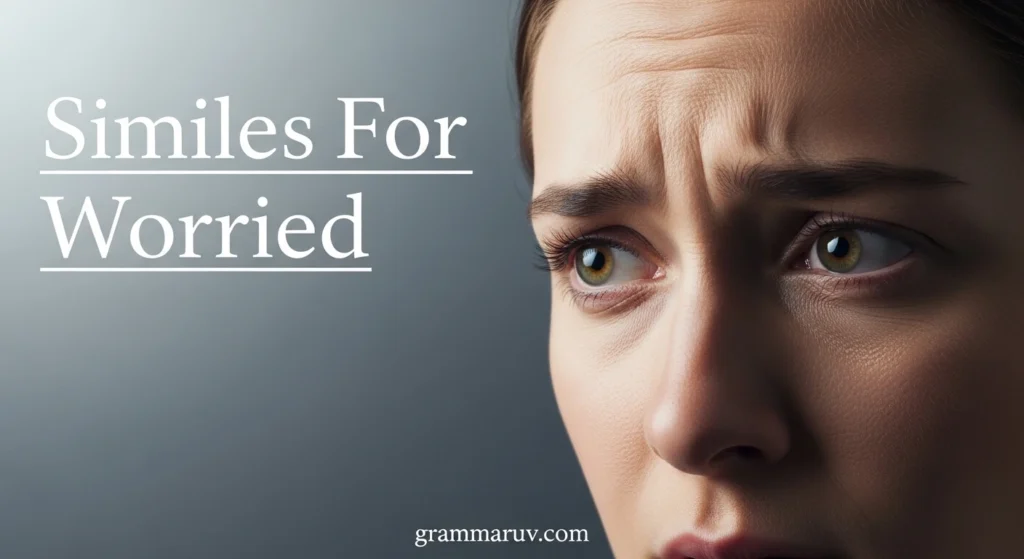
Worry is a feeling almost everyone knows. It can be quiet and hidden, or loud and overwhelming. Sometimes, simple words like nervous, anxious, or afraid do not fully capture what a person feels inside. That is where similes become useful. They help describe emotions in a more vivid, memorable, and relatable way.
Similes are a common form of figurative language that compare one thing to another using words such as like or as. Writers, students, bloggers, and even everyday speakers use them to make language more colorful. Instead of saying someone is worried, you can say they were like a cat on a hot tin roof or as uneasy as a leaf in the wind. These comparisons make emotions easier to imagine.
In creative writing, similes for worried can improve storytelling, dialogue, essays, poems, and social media captions. They add depth to emotional expression and help readers feel the tension more clearly. They are also helpful in daily conversation when you want your words to sound more natural, expressive, and engaging.
As Nervous As A Cat In A Room Full Of Rocking Chairs
This simile paints a picture of extreme nervousness and tension. A cat in such a room would be alert, jumpy, and constantly afraid of danger. It is one of the most vivid similes for worried because it immediately creates a strong image in the reader’s mind.
Meaning: Feeling highly anxious, tense, and fearful about what may happen next.
Tone: Humorous, vivid, slightly dramatic
Best Usage Context: Informal writing, storytelling, dialogue, blog writing
Example sentences:
- Before the interview began, I was as nervous as a cat in a room full of rocking chairs.
- He looked as nervous as a cat in a room full of rocking chairs while waiting for the exam results.
- She became as nervous as a cat in a room full of rocking chairs when her phone rang late at night.
This simile works especially well when you want to describe visible anxiety in a colorful and memorable way.
As Uneasy As A Leaf In The Wind
This simile suggests instability, restlessness, and emotional discomfort. A leaf in the wind cannot stay still, and that image matches a worried mind that keeps shifting from one fear to another.
Meaning: Feeling unsettled, restless, and mentally disturbed by worry.
Tone: Poetic, gentle, descriptive
Best Usage Context: Creative writing, reflective essays, emotional descriptions
Example sentences:
- All evening, she felt as uneasy as a leaf in the wind.
- He sat quietly, but inside he was as uneasy as a leaf in the wind.
- I felt as uneasy as a leaf in the wind while waiting for the doctor’s call.
This one is great for softer emotional writing where you want to show worry without sounding too harsh.
Like A Deer Caught In Headlights
This simile is often used for a person who suddenly freezes because of fear, anxiety, or confusion. It is especially effective when worry appears instantly.
Meaning: Feeling shocked, frightened, and unable to react because of stress or worry.
Tone: Dramatic, visual, intense
Best Usage Context: Narrative writing, dialogue, high-stress scenes
Example sentences:
- When the teacher asked him a direct question, he looked like a deer caught in headlights.
- She stood like a deer caught in headlights after hearing the unexpected news.
- I felt like a deer caught in headlights when my boss called me into the office.
This simile is powerful for describing worried reactions in fast-moving situations.
As Restless As A Bird In A Cage
A bird in a cage often moves constantly, unable to settle. That makes this simile a strong way to express anxious waiting or emotional pressure.
Meaning: Feeling trapped, unsettled, and unable to relax because of worry.
Tone: Emotional, vivid, slightly sad
Best Usage Context: Personal writing, emotional storytelling, essays
Example sentences:
- He was as restless as a bird in a cage before the surgery.
- I felt as restless as a bird in a cage while waiting for her reply.
- She paced the room, as restless as a bird in a cage, worried about her family.
This simile works beautifully when the worry feels prolonged rather than sudden.
As Tense As A Tightrope Walker In A Storm
This simile combines danger, pressure, and instability. It describes someone carrying a heavy emotional burden while trying not to collapse.
Meaning: Feeling extremely pressured, anxious, and mentally stretched.
Tone: Strong, dramatic, descriptive
Best Usage Context: Formal and creative writing, intense emotional scenes
Example sentences:
- He was as tense as a tightrope walker in a storm before the final decision was announced.
- I felt as tense as a tightrope walker in a storm during the job interview.
- She looked as tense as a tightrope walker in a storm while waiting outside the courtroom.
Use this when you want to emphasize serious or high-stakes worry.
Like Sitting On Pins And Needles
This is a widely used expression and an effective simile-like comparison for worried anticipation. It captures the discomfort of waiting nervously.
Meaning: Feeling impatient, anxious, and uncomfortable while waiting.
Tone: Common, conversational, natural
Best Usage Context: Everyday speech, blogs, informal writing
Example sentences:
- We were sitting on pins and needles until the test report arrived.
- I felt like I was sitting on pins and needles all morning.
- She sat on pins and needles while her son was in the operating room.
This phrase is excellent for daily use because it sounds natural and familiar.
As Shaky As A Candle Flame In The Wind
This simile shows emotional fragility. A candle flame in the wind may flicker or go out at any moment, just like a worried person can feel unsteady.
Meaning: Feeling fragile, uncertain, and emotionally unstable from worry.
Tone: Poetic, emotional, gentle
Best Usage Context: Descriptive writing, poetry, reflective content
Example sentences:
- His confidence was as shaky as a candle flame in the wind.
- I felt as shaky as a candle flame in the wind before giving my speech.
- She smiled, but inside she was as shaky as a candle flame in the wind.
This is a beautiful choice for sensitive or literary writing.
Like A Rabbit Hearing Footsteps
Rabbits are known for alertness and fear. This simile suggests quick anxiety and the expectation of danger.
Meaning: Feeling alert, frightened, and ready to panic.
Tone: Vivid, animal-based, tense Best Usage Context: Creative writing, suspenseful scenes, emotional storytelling
Example sentences:
- He looked like a rabbit hearing footsteps when the manager approached.
- I felt like a rabbit hearing footsteps after sending that risky message.
- She became like a rabbit hearing footsteps whenever the phone rang.
This simile works well when worry is tied to fear of consequences.
As Anxious As A Student Before Results Day
This simile is instantly relatable for many readers. It draws on a real-life moment of fear, anticipation, and uncertainty.
Meaning: Feeling intensely worried about an important outcome. Tone: Relatable, modern, clear Best Usage Context: Educational writing, blogs, casual conversation
Example sentences:
- I was as anxious as a student before results day all weekend.
- He waited as anxious as a student before results day.
- She felt as anxious as a student before results day before opening the email.
Because it is so relatable, this simile is excellent for SEO-friendly writing aimed at a broad audience.
As Worried As A Parent Waiting For A Late Child
This simile carries emotional depth and seriousness. It reflects deep concern, fear, and helpless waiting.
Meaning: Feeling deeply concerned for someone’s safety or well-being.
Tone: Emotional, serious, heartfelt Best Usage Context: Emotional writing, family-focused stories, realistic descriptions
Example sentences:
- She was as worried as a parent waiting for a late child during the storm.
- He paced the hallway, as worried as a parent waiting for a late child.
- I felt as worried as a parent waiting for a late child when my brother stopped answering calls.
This simile is best when the worry is rooted in care and love.
Like A Sailor Watching Dark Clouds Gather
A sailor seeing dark clouds knows trouble may be coming. This simile suggests worry caused by signs of possible danger.
Meaning: Feeling anxious because something bad seems likely to happen.
Tone: Atmospheric, poetic, slightly dramatic Best Usage Context: Storytelling, essays, descriptive writing
Example sentences:
- He looked like a sailor watching dark clouds gather when he heard the rumor.
- I felt like a sailor watching dark clouds gather after that meeting.
- She grew quiet, like a sailor watching dark clouds gather, when the doctor frowned.
This comparison is strong when worry comes from warning signs rather than confirmed bad news.
As Jittery As A Drum Before A Parade
This simile suggests energy, anticipation, and nervous movement. It gives a lively picture of emotional agitation.
Meaning: Feeling jumpy, excited, and worried all at once.
Tone: Playful, energetic, vivid Best Usage Context: Informal writing, light storytelling, conversational use
Example sentences:
- I was as jittery as a drum before a parade on my first day at work.
- She felt as jittery as a drum before a parade before stepping onto the stage.
- He looked as jittery as a drum before a parade while waiting for the call.
This one is useful when worry mixes with excitement.
As Troubled As Water Before A Storm
Water before a storm begins to shift and darken. That image mirrors an anxious mind disturbed by fear and uncertainty.
Meaning: Feeling inwardly disturbed and emotionally unsettled.
Tone: Poetic, moody, descriptive Best Usage Context: Literary writing, emotional essays, creative content
Example sentences:
- His mind was as troubled as water before a storm.
- I felt as troubled as water before a storm the night before the decision.
- She seemed calm on the outside, but inside she was as troubled as water before a storm.
This simile gives your writing a more elegant and reflective feel.
Like A Phone Battery At One Percent
This is a modern simile that many readers instantly understand. It blends humor with urgency and stress.
Meaning: Feeling close to panic, under pressure, and worried something will go wrong soon. Tone: Modern, casual, humorous Best Usage Context: Social media, blogs, texting, youth-oriented writing
Example sentences:
- I was like a phone battery at one percent waiting for his response.
- She felt like a phone battery at one percent before the submission deadline.
- He looked like a phone battery at one percent when the Wi-Fi stopped working.
This is one of the best modern similes for worried in casual English.
As Frail As Glass In Shaking Hands
This simile expresses emotional vulnerability. It suggests that worry makes a person feel delicate and close to breaking.
Meaning: Feeling emotionally weak, vulnerable, and unstable because of fear or worry.
Tone: Sensitive, emotional, literary Best Usage Context: Poetry, personal reflection, emotional storytelling
Example sentences:
- She felt as frail as glass in shaking hands after hearing the news.
- I was as frail as glass in shaking hands before speaking to them.
- He looked as frail as glass in shaking hands during the tense conversation.
This is ideal when you want to show how deeply worry affects someone.
Like A Mouse Near A Trap
A mouse near a trap senses danger everywhere. This simile captures suspicion, fear, and careful nervousness.
Meaning: Feeling cautious, fearful, and worried about sudden harm or trouble.
Tone: Tense, sharp, visual Best Usage Context: Suspense writing, dialogue, dramatic descriptions
Example sentences:
- He moved through the office like a mouse near a trap.
- I felt like a mouse near a trap while waiting for her reaction.
- She answered the questions like a mouse near a trap, worried about saying the wrong thing.
Use this simile when the worry is linked with danger or risk.
As Fidgety As A Coin Spinning On A Table
A spinning coin never stays still. This image reflects a worried person who keeps moving, thinking, and waiting.
Meaning: Feeling physically restless and mentally unsettled.
Tone: Creative, visual, lively Best Usage Context: Casual writing, descriptions of body language, blogs
Example sentences:
- He was as fidgety as a coin spinning on a table before the interview.
- I felt as fidgety as a coin spinning on a table all day.
- She sat there as fidgety as a coin spinning on a table, checking her phone every minute.
This simile is especially useful when showing worry through actions.
As Disturbed As A Pond Touched By Rain
This simile focuses on emotional ripples. A pond may seem calm, but even a little rain changes its surface.
Meaning: Feeling quietly upset, worried, and internally affected.
Tone: Soft, poetic, thoughtful Best Usage Context: Reflective writing, descriptive passages, emotional prose
Example sentences:
- He seemed calm, but he was as disturbed as a pond touched by rain.
- I felt as disturbed as a pond touched by rain after hearing the conversation.
- She remained silent, as disturbed as a pond touched by rain.
This is a subtle simile for worry that fits gentle, expressive writing.
Like A Man Walking On Thin Ice
Walking on thin ice suggests danger with every step. This simile is perfect for situations where one mistake could lead to trouble.
Meaning: Feeling worried because the situation is risky, fragile, or uncertain.
Tone: Serious, tense, realistic Best Usage Context: Work situations, conflict scenes, stressful narratives
Example sentences:
- After missing the deadline, he felt like a man walking on thin ice.
- I was like a man walking on thin ice during the entire meeting.
- She answered carefully, like a person walking on thin ice.
This one is strong for workplace anxiety and relationship tension.
As Apprehensive As A Traveler Without A Map
A traveler without a map feels uncertain and vulnerable. This simile reflects the fear of not knowing what comes next.
Meaning: Feeling uncertain, lost, and worried about the future.
Tone: Thoughtful, clear, relatable Best Usage Context: Life advice articles, personal growth writing, essays
Example sentences:
- I felt as apprehensive as a traveler without a map after graduation.
- He looked as apprehensive as a traveler without a map in the new city.
- She was as apprehensive as a traveler without a map before starting her new job.
This simile is excellent for emotional and life-transition writing.
Like A Balloon Ready To Burst
A balloon filled too much can pop at any moment. This comparison reflects emotional pressure caused by too much worry.
Meaning: Feeling overwhelmed, pressured, and close to emotional collapse.
Tone: Strong, modern, expressive Best Usage Context: Personal writing, blogs, emotional dialogue
Example sentences:
- I felt like a balloon ready to burst before the presentation.
- She looked like a balloon ready to burst after days of stress.
- He was like a balloon ready to burst while waiting for the final answer.
This simile works best when worry has built up over time.
As Alert As A Guard Dog At Midnight
A guard dog at midnight is watchful, tense, and ready for trouble. This makes it a strong simile for anxious alertness.
Meaning: Feeling watchful, suspicious, and unable to relax because of worry.
Tone: Strong, vivid, guarded Best Usage Context: Suspense writing, tense descriptions, storytelling
Example sentences:
- He was as alert as a guard dog at midnight after hearing the noise.
- I felt as alert as a guard dog at midnight waiting for the message.
- She stayed as alert as a guard dog at midnight throughout the whole journey.
This simile is useful when worry keeps someone mentally on edge.
As Heavy As A Heart Before Bad News
This simile focuses less on movement and more on emotional weight. It is ideal for deep worry and dread.
Meaning: Feeling burdened by fear, sadness, or anxious expectation.
Tone: Emotional, serious, reflective Best Usage Context: Literary writing, emotional scenes, serious personal writing
Example sentences:
- My chest felt as heavy as a heart before bad news.
- He walked in silence, as heavy as a heart before bad news.
- She sounded as heavy as a heart before bad news when she answered the phone.
This is a powerful emotional simile when worry feels painful and deep.
Like A Shadow That Will Not Leave
This simile suggests constant, lingering worry that follows a person everywhere.
Meaning: Feeling persistent anxiety that stays in the mind all day.
Tone: Poetic, haunting, emotional Best Usage Context: Reflective writing, mental health themes, serious storytelling
Example sentences:
- The fear stayed with him like a shadow that would not leave.
- My worry followed me like a shadow that would not leave.
- She carried that anxious thought like a shadow that would not leave.
This simile is excellent for showing lasting emotional tension.
As Unsettled As Sand Under Waves
Sand under waves is always shifting and never fully steady. This image fits the feeling of inner instability caused by worry.
Meaning: Feeling emotionally unstable, uncertain, and unable to feel secure.
Tone: Descriptive, poetic, thoughtful Best Usage Context: Creative writing, essays, emotional descriptions
Example sentences:
- I felt as unsettled as sand under waves before moving away.
- He seemed as unsettled as sand under waves after the argument.
- She was as unsettled as sand under waves while waiting for the results.
This simile suits situations where worry makes everything feel uncertain.
As Cautious As Someone Carrying A Cup Full To The Brim
This simile reflects nervous care. A person carrying a full cup moves carefully to avoid spilling anything, just like someone worried about making mistakes.
Meaning: Feeling worried enough to act very carefully and cautiously.
Tone: Realistic, clear, relatable Best Usage Context: Everyday writing, workplace situations, practical examples
Example sentences:
- He spoke as cautious as someone carrying a cup full to the brim.
- I moved through the conversation as cautious as someone carrying a cup full to the brim.
- She answered each question as cautious as someone carrying a cup full to the brim.
This is a very natural simile for situations involving tension and self-control.
Daily-Use Sentences With Similes For Worried
Here are some quick everyday lines you can use in conversation, captions, school writing, or chat messages:
- I’m as nervous as a cat in a room full of rocking chairs right now.
- She’s been like a balloon ready to burst all day.
- He looked like a deer caught in headlights when they asked him.
- I feel as uneasy as a leaf in the wind before exams.
- She was sitting on pins and needles waiting for the update.
- I’m like a phone battery at one percent before every deadline.
- He seemed as restless as a bird in a cage all morning.
- I’ve been as unsettled as sand under waves lately.
These short lines sound natural and help you use figurative language in real life.
Texting Examples For Similes For Worried
Similes are not only for essays and stories. They also work well in text messages, social captions, and casual chats.
Here are some useful texting-style examples:
- I’m literally like a phone battery at one percent waiting for their reply.
- Not gonna lie, I’m as nervous as a cat in a room full of rocking chairs.
- Been sitting on pins and needles all day.
- I feel like a deer caught in headlights rn.
- She’s as restless as a bird in a cage about tomorrow.
- I’m as anxious as a student before results day.
- He sounded as heavy as a heart before bad news.
- I’ve been like a shadow that will not leave with this worry.
These are especially good if you want expressive but simple emotional language.
How To Choose The Right Simile For Worried
Not every simile fits every situation. The best choice depends on tone, audience, and context.
Here are a few quick tips:
- Use funny similes like a phone battery at one percent for casual speech and light content.
- Use poetic similes like a leaf in the wind for creative writing and emotional essays.
- Use serious similes like a parent waiting for a late child for deep emotional scenes.
- Use modern relatable similes for blogs, social media, and younger audiences.
- Use visual similes when you want readers to immediately imagine the emotion.
Good figurative language should feel natural. The goal is not to sound complicated. The goal is to make the feeling clearer and stronger.
Why Similes For Worried Improve Writing
Using similes can make your writing more powerful in several ways. They do more than decorate a sentence. They help readers connect emotionally.
Here is why they work so well:
- They make emotions easier to picture.
- They add creativity to simple descriptions.
- They help readers feel tension and anxiety more clearly.
- They improve storytelling and character depth.
- They make blog posts, essays, and captions more memorable.
If you are writing fiction, poetry, school assignments, or SEO blog content, strong similes can improve both readability and engagement.
Conclusion
Similes for worried help transform plain emotional language into something vivid, human, and memorable. Instead of simply saying someone felt anxious, you can show that feeling through powerful comparisons that readers instantly understand. Whether you prefer poetic phrases like as uneasy as a leaf in the wind or modern expressions like like a phone battery at one percent, each simile adds color and emotion to your writing.
The best part is that these similes work in many forms of communication. You can use them in stories, essays, text messages, captions, classroom writing, and even daily conversation. With the right simile, worry becomes easier to express and more meaningful to the reader.
Keep experimenting with figurative language. A simple comparison can turn an ordinary sentence into one that feels alive. The more naturally you use similes, the stronger and more expressive your writing will become.
FAQs
What Are Similes For Worried?
Similes for worried are comparisons that describe anxiety, nervousness, fear, or emotional unease using like or as. For example, as nervous as a cat in a room full of rocking chairs is a simile that expresses strong worry.
Why Should I Use Similes In Writing?
Similes make writing more vivid and engaging. They help readers imagine emotions more clearly, improve creative expression, and make sentences sound less flat or repetitive.
Can I Use Similes For Worried In Daily Conversation?
Yes, absolutely. Many similes sound natural in everyday speech. Phrases like on pins and needles or like a deer caught in headlights are common in casual conversation.
Are Similes For Worried Good For Students?
Yes. Students can use similes to improve essays, stories, speeches, and descriptive writing. They show creativity and help explain emotions in a more interesting way.
Which Simile For Worried Sounds Most Modern?
A modern example is like a phone battery at one percent. It feels current, relatable, and easy for most readers to understand, especially in texting and online writing.
How Do I Choose The Best Simile For My Sentence?
Think about your tone and audience. Use humorous similes for casual content, poetic ones for creative writing, and more serious comparisons for emotional or dramatic situations.